Selected work
Case study · Strategic foresight

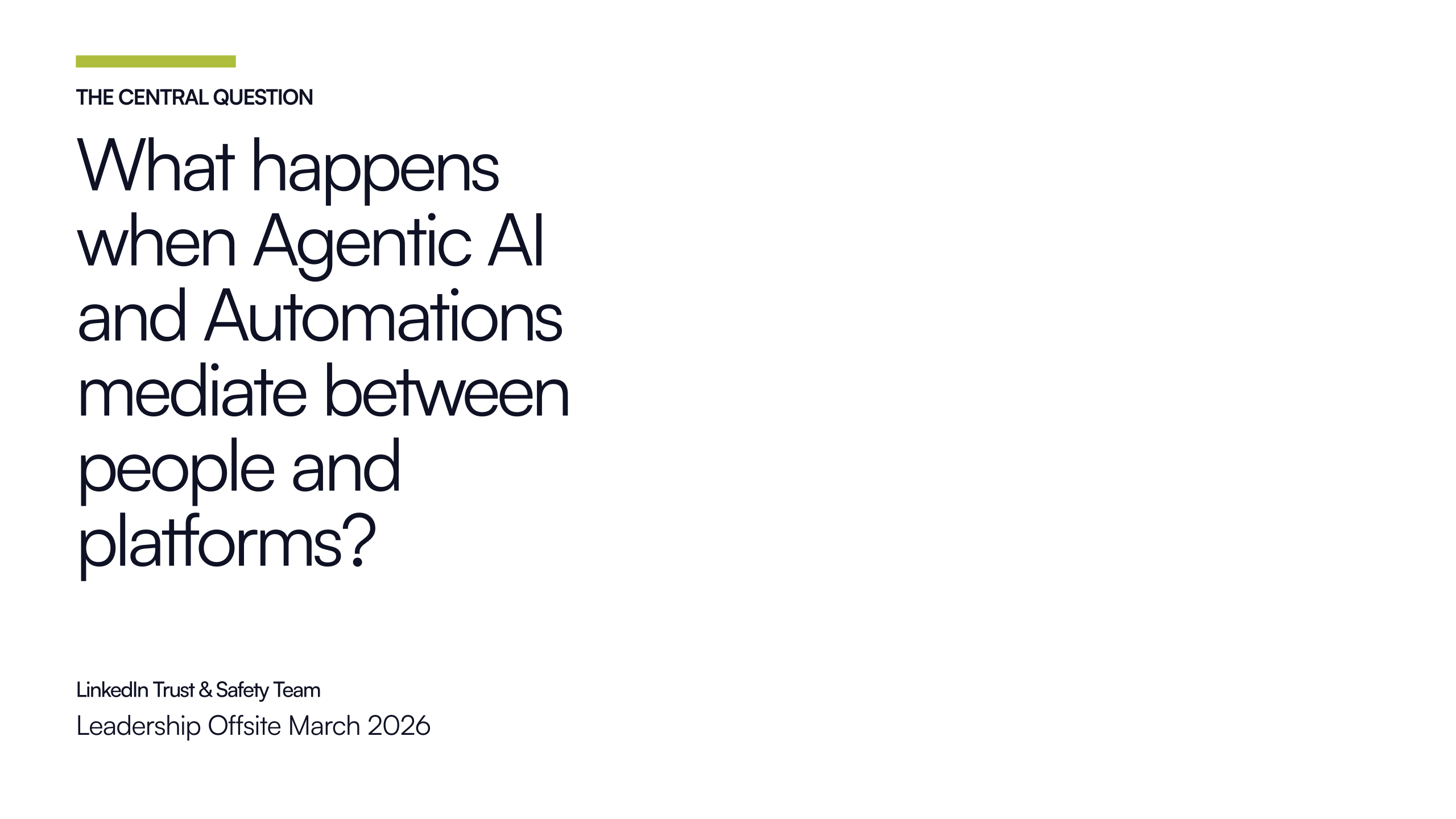
Exploring agentic futures with LinkedIn Trust Leadership
Context
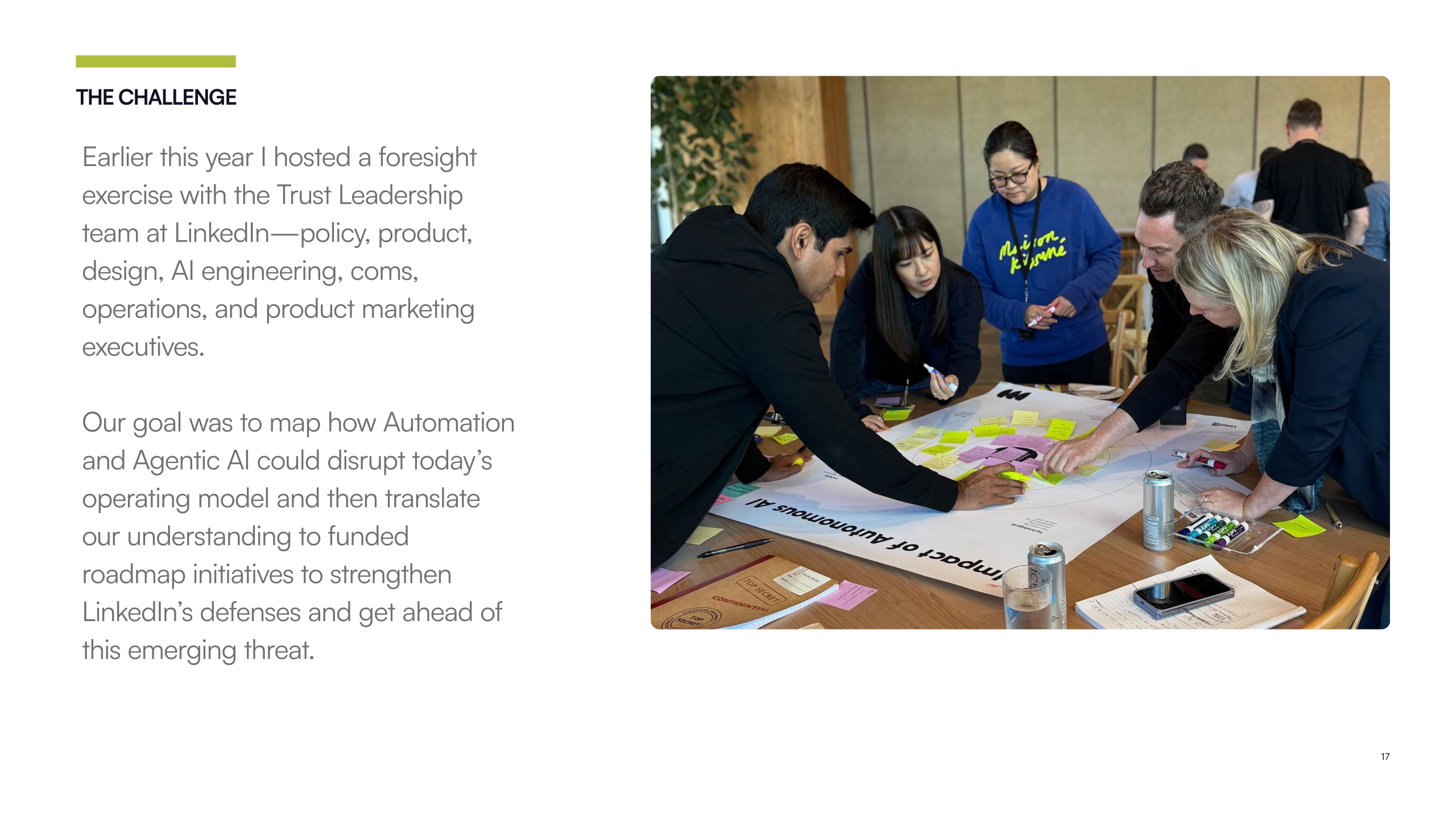
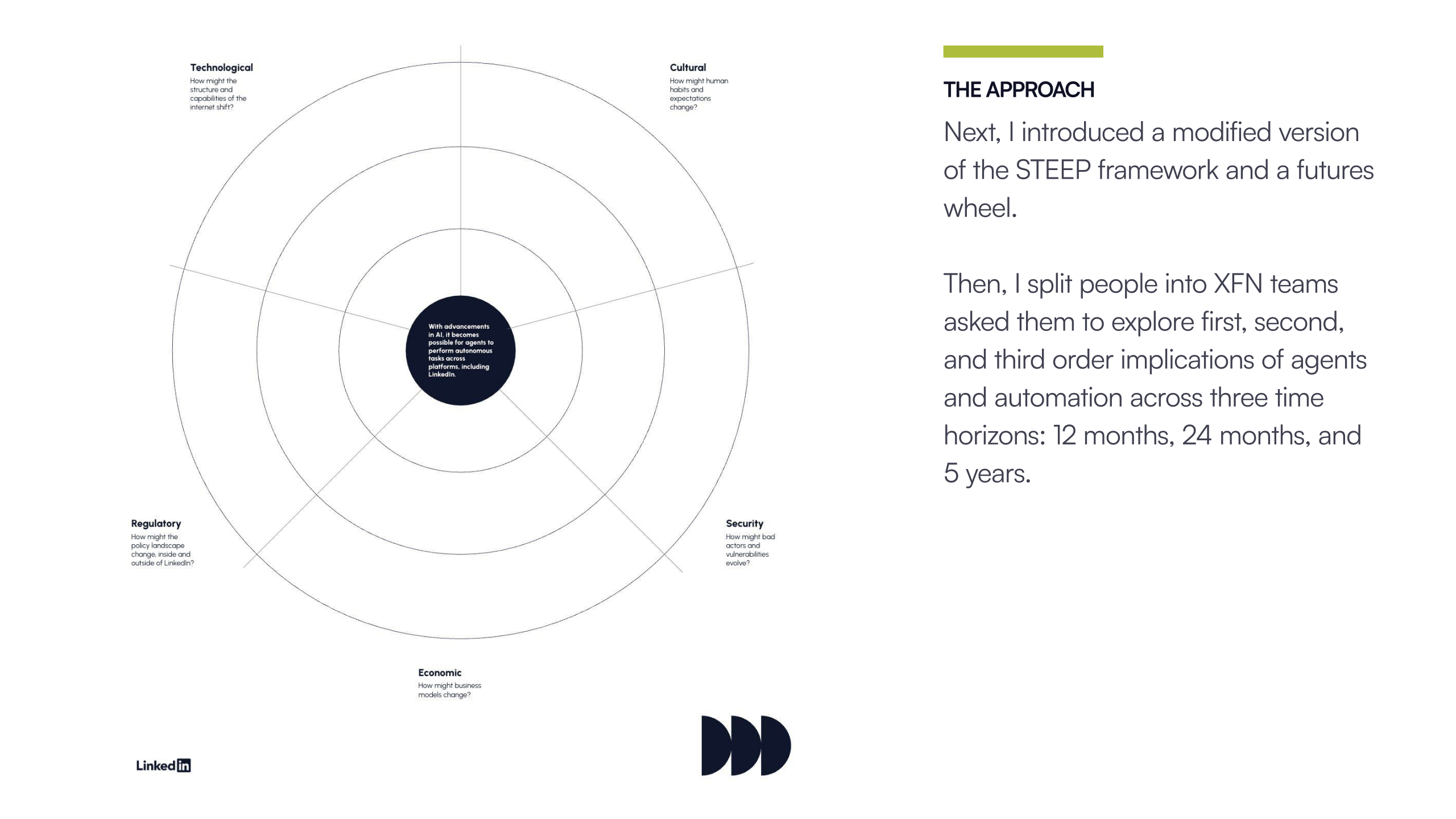
Trust leadership needed to reason about the second- and third-order consequences of agentic AI, but the business cadence always pulled the team to focus on the near term—putting out fires and reacting to compliance deadlines. There was appetite for long-horizon work, but nobody knew how to do it, and it was being crowded out: it had no owner, no method, and no slot in the agenda.
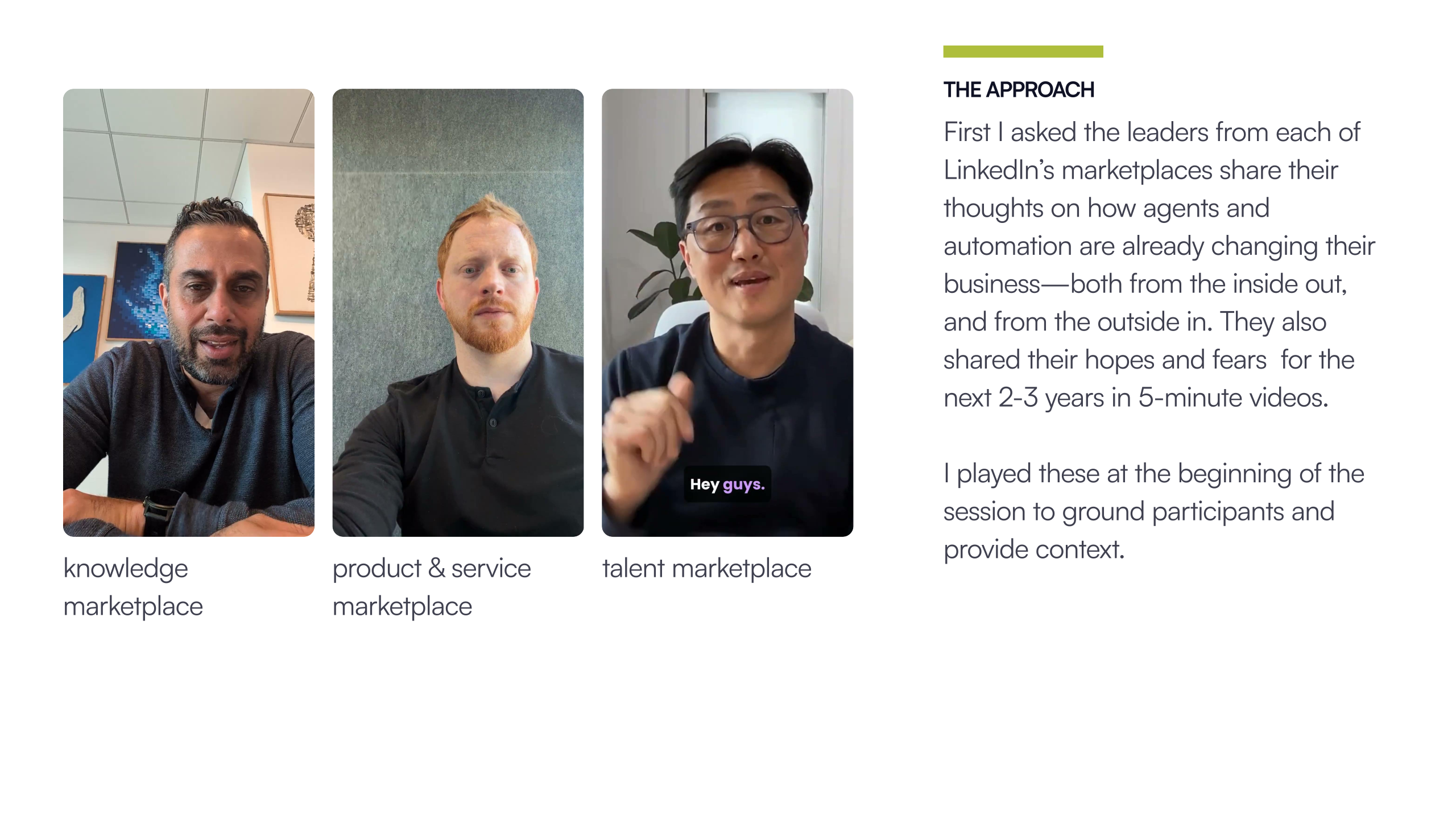
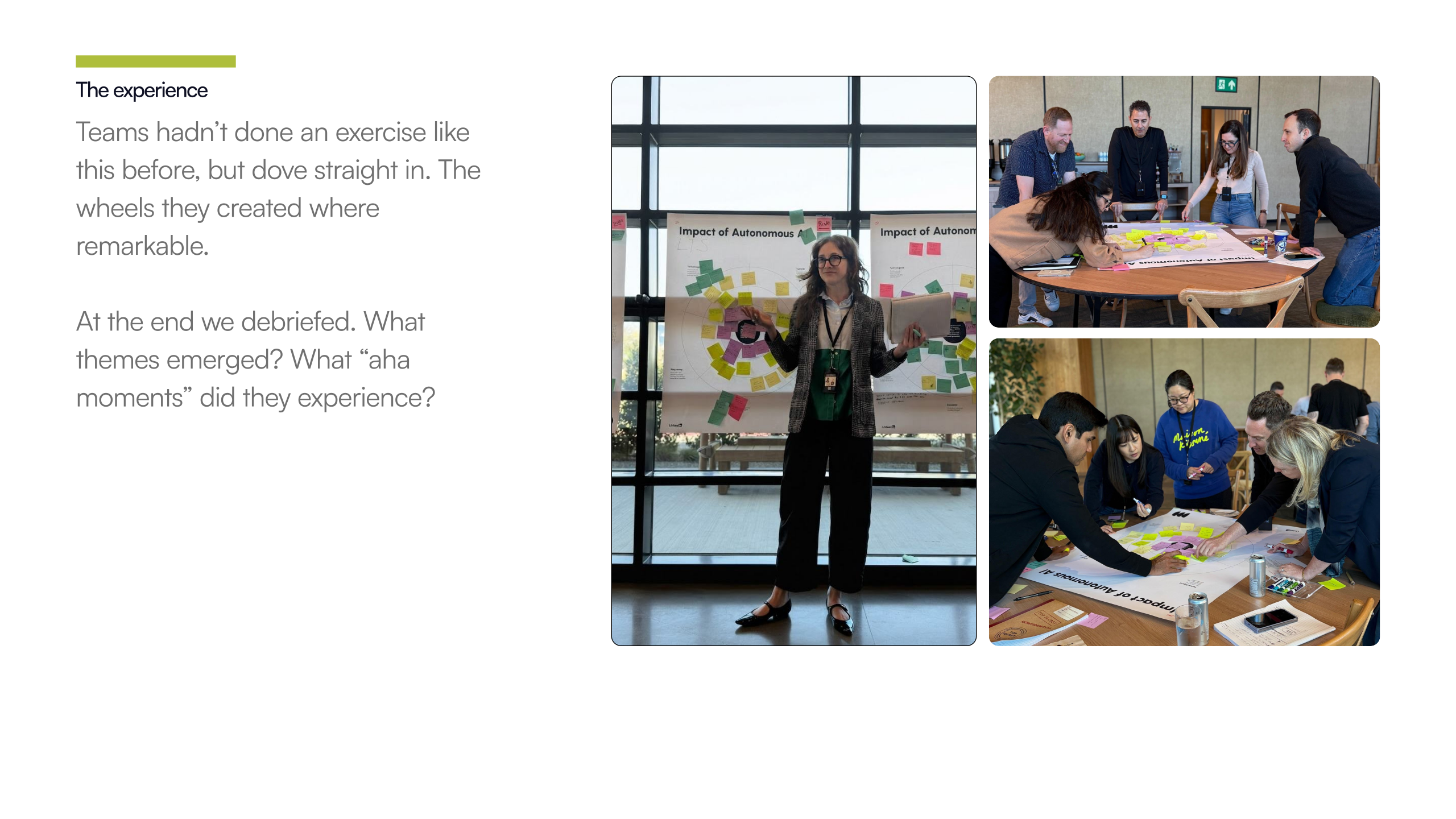
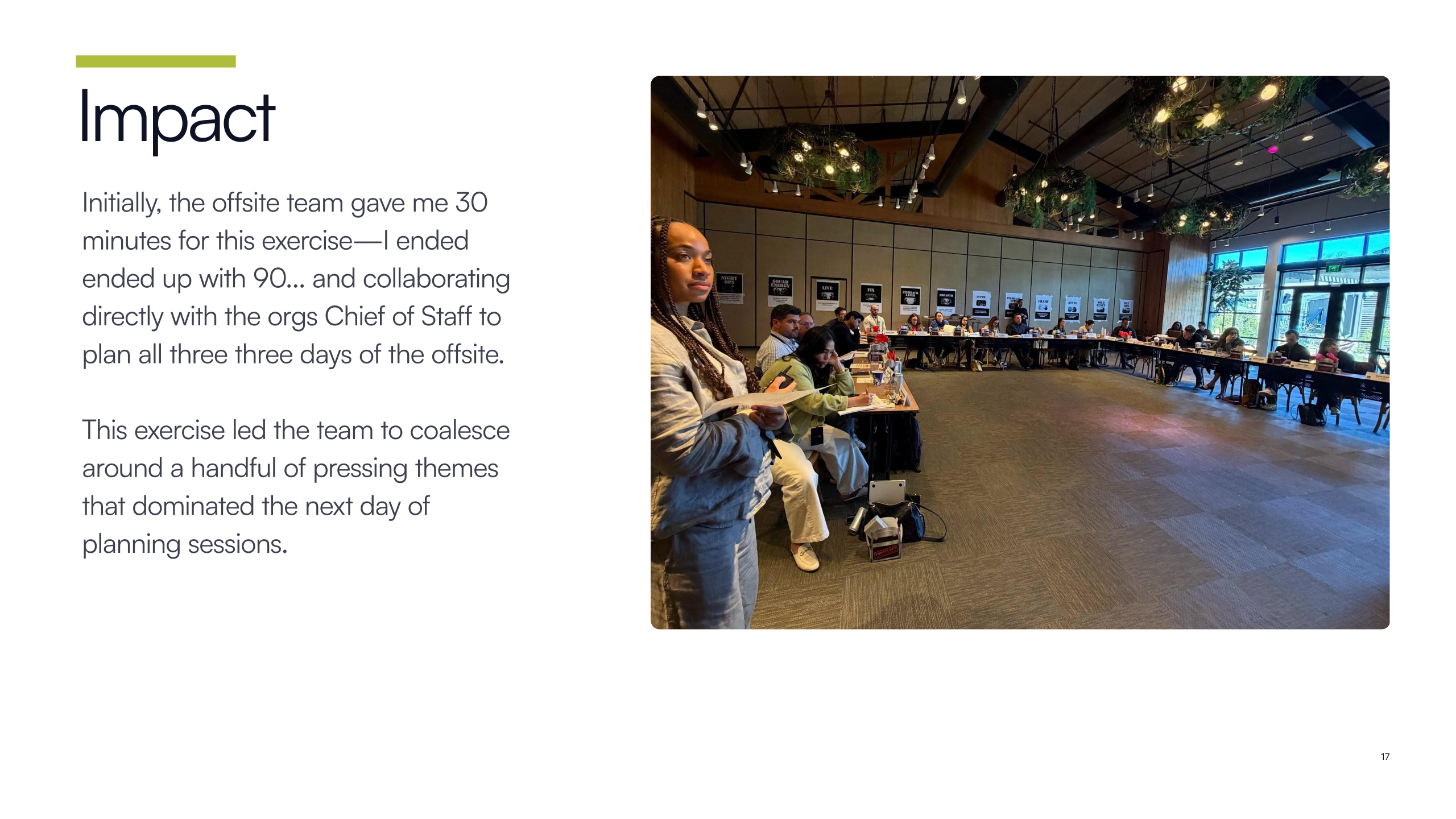
When I initially pitched the idea of doing a futures exercise to the team's Chief of Staff, I got 30 minutes. But once I shared my approach, I got 90 minutes—and in fact ended up helping plan much of the offsite around the exercise we proposed.
After the exercise, I synthesized the emerging themes and wrote up a summary to be shared at the start of the next day. The morning started with acknowledging how an encounter with possible futures can feel overwhelming. We talked about how this is "normal" and the value of what Jay Ogilvy, my foresight professor in grad school, called "scenaric stance"—holding both catastrophe and success in the mind at the same time and then refusing to fall into either blind optimism or fatalistic resignation—and instead to use what agency we do have and take action!
This is a method case study. The risk analysis, the strategic options and the planning inputs the exercise produced are my former employer's confidential strategy, and none of them appear above. I'm glad to go as deep as you'd like on the method, the facilitation, or the synthesis.
Case study · Strategic foresight

Teaching UX research teams to think like futurists
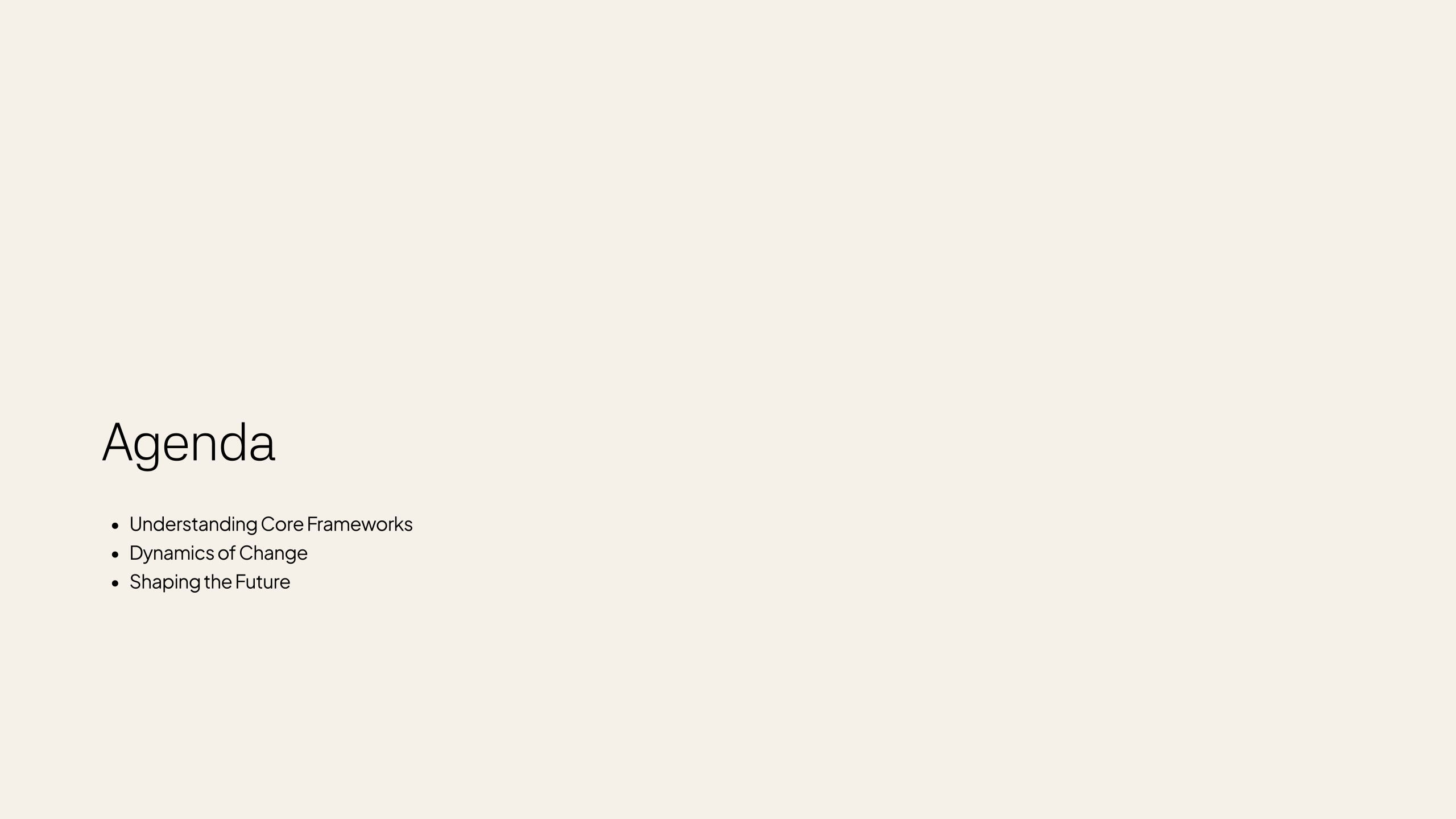
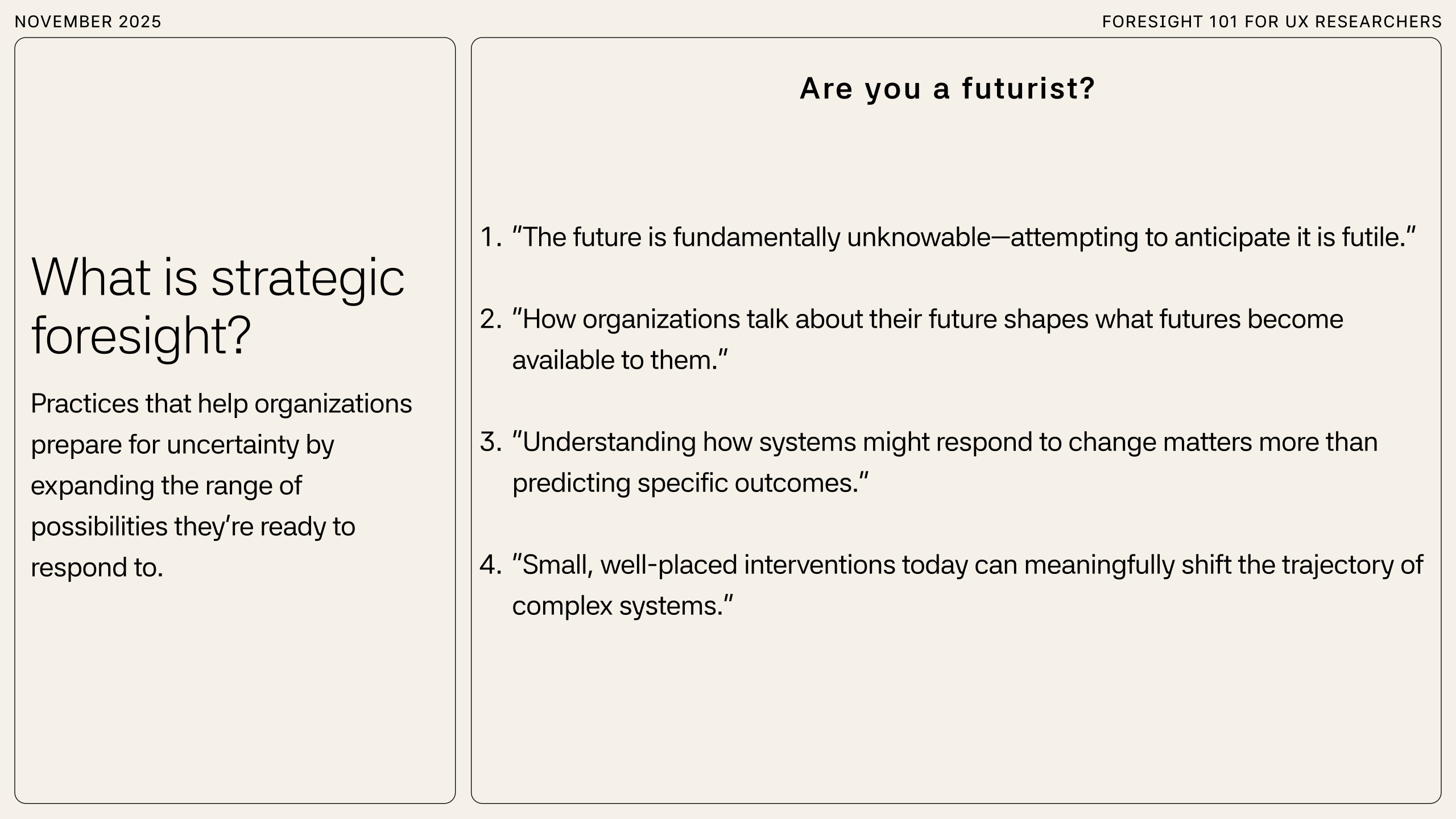
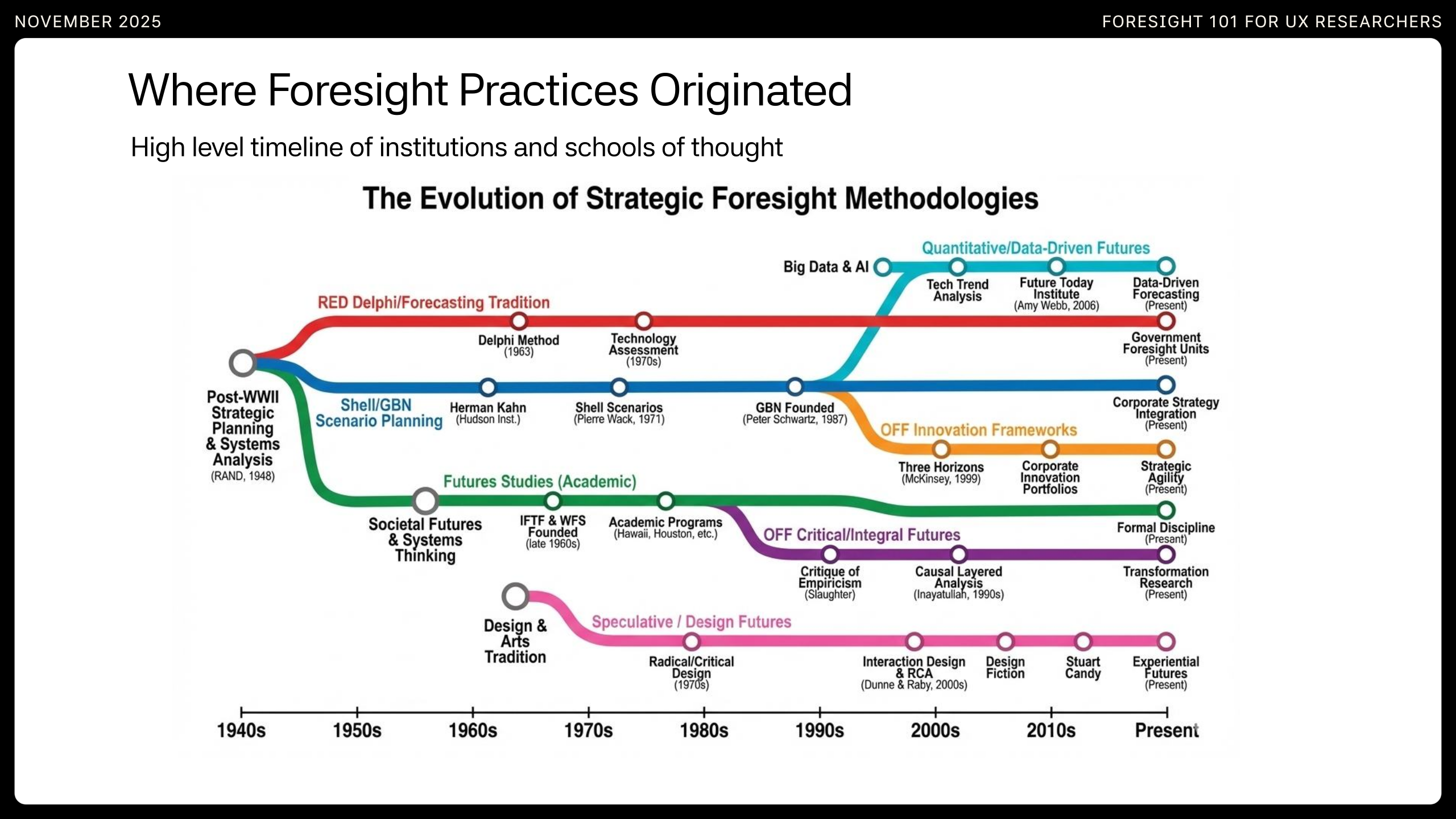
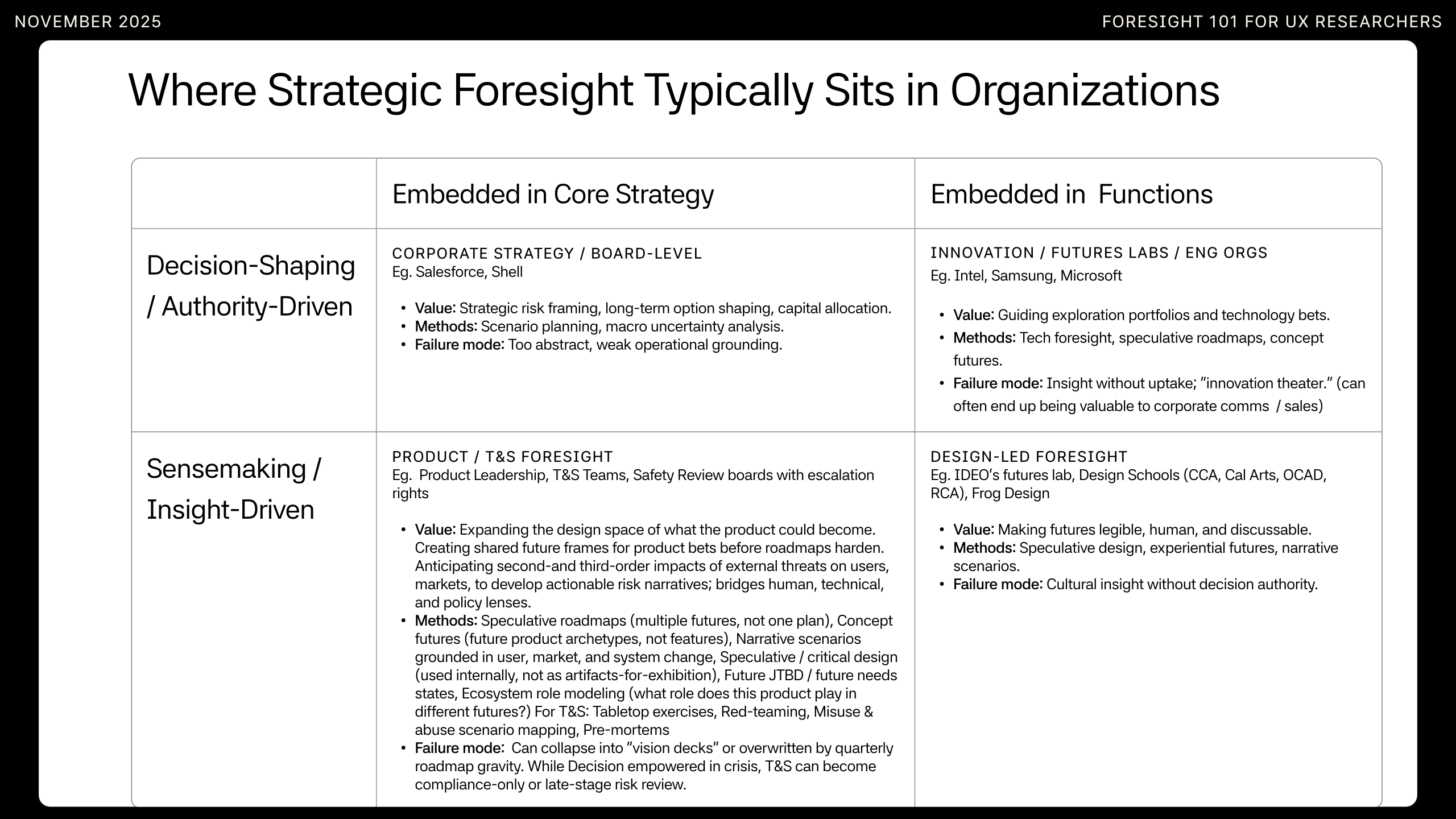
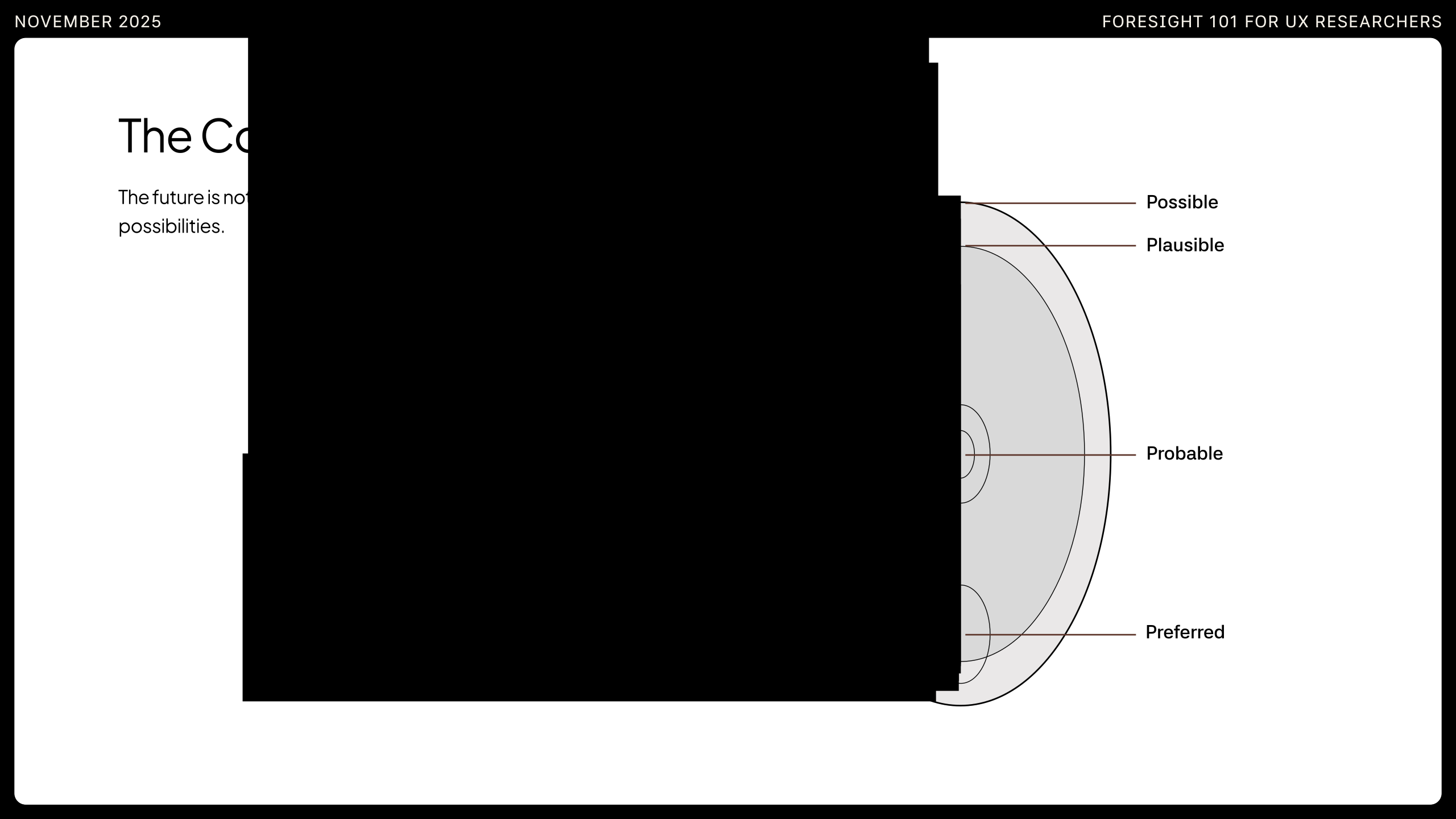
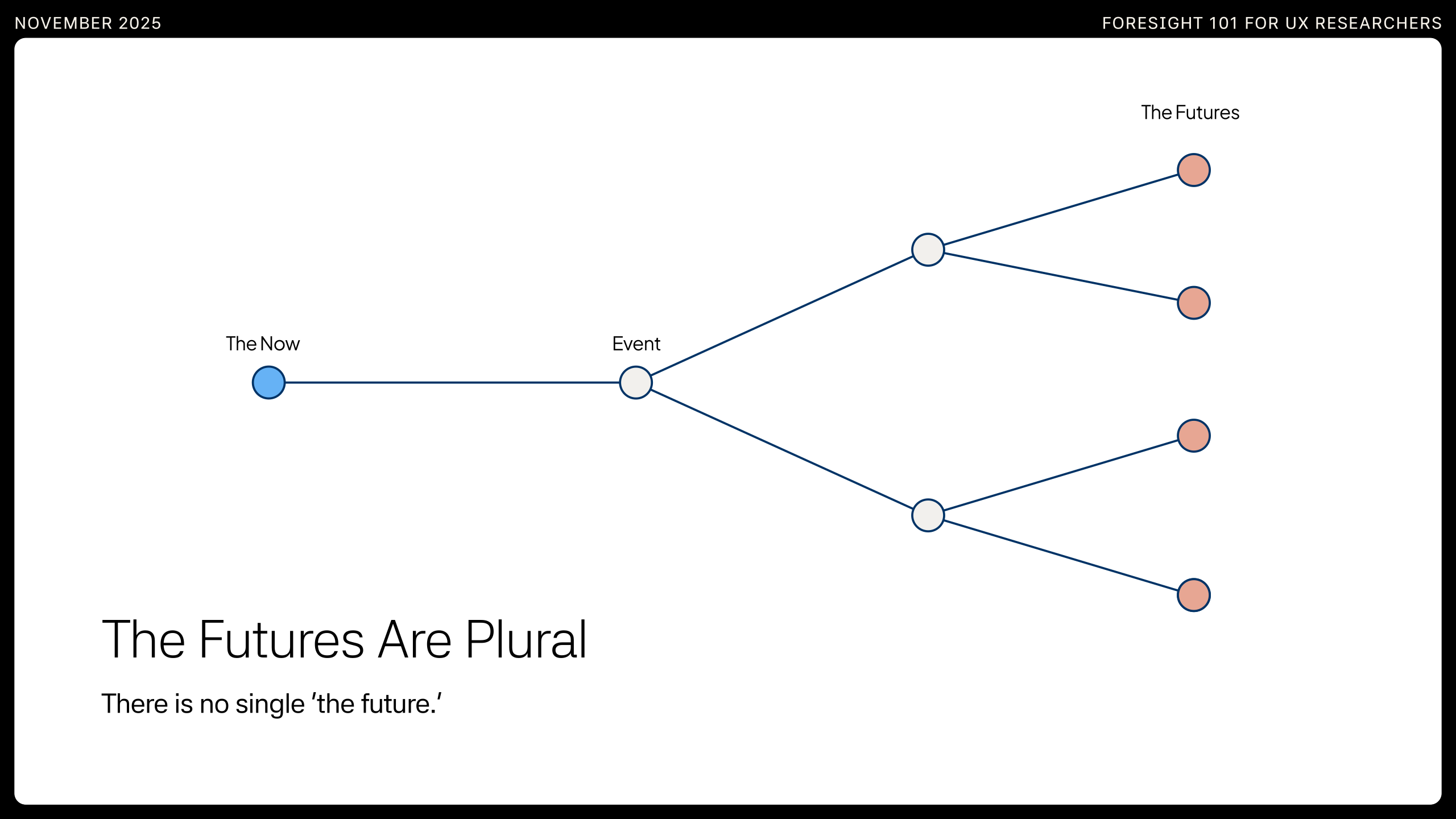
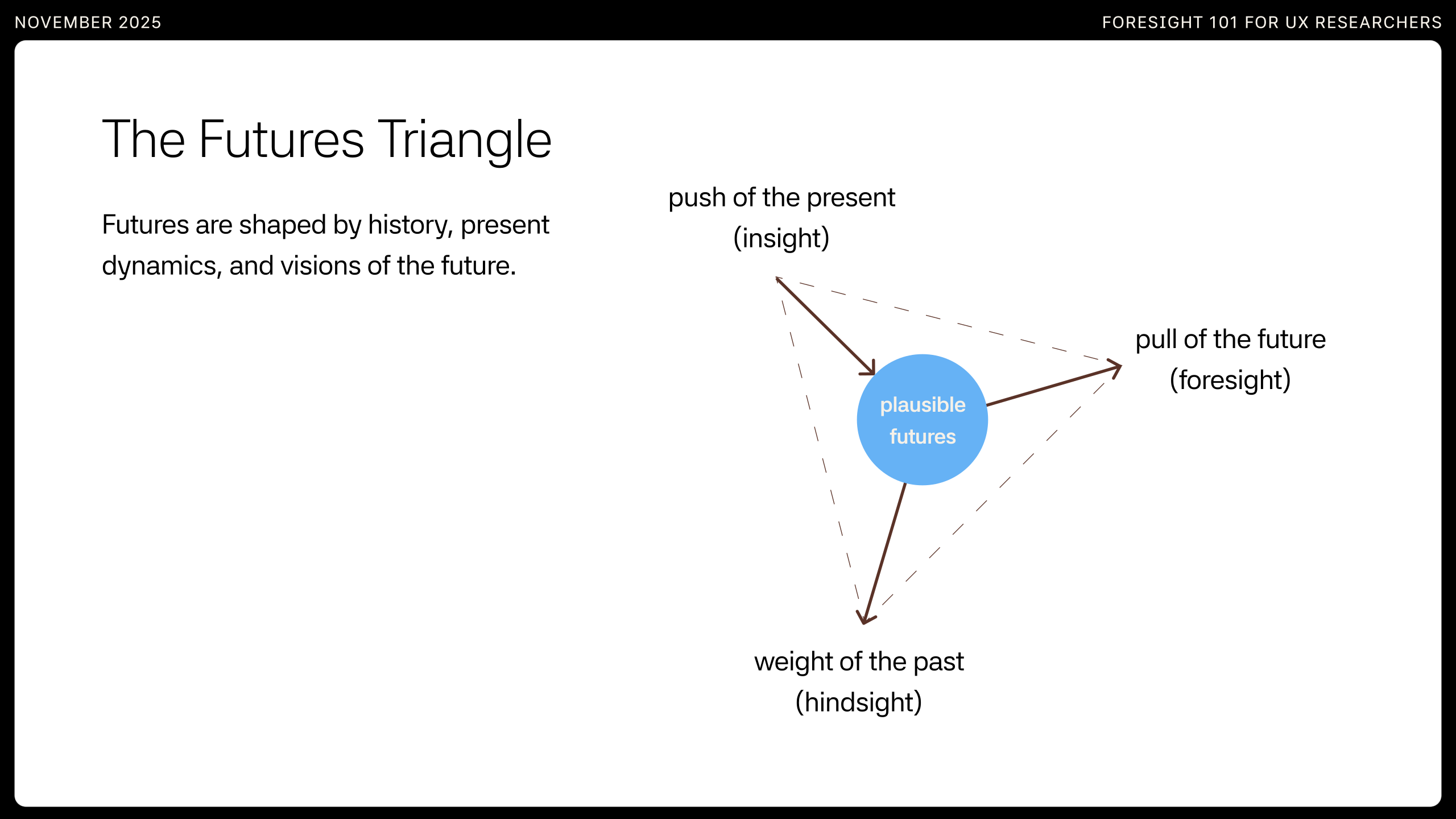
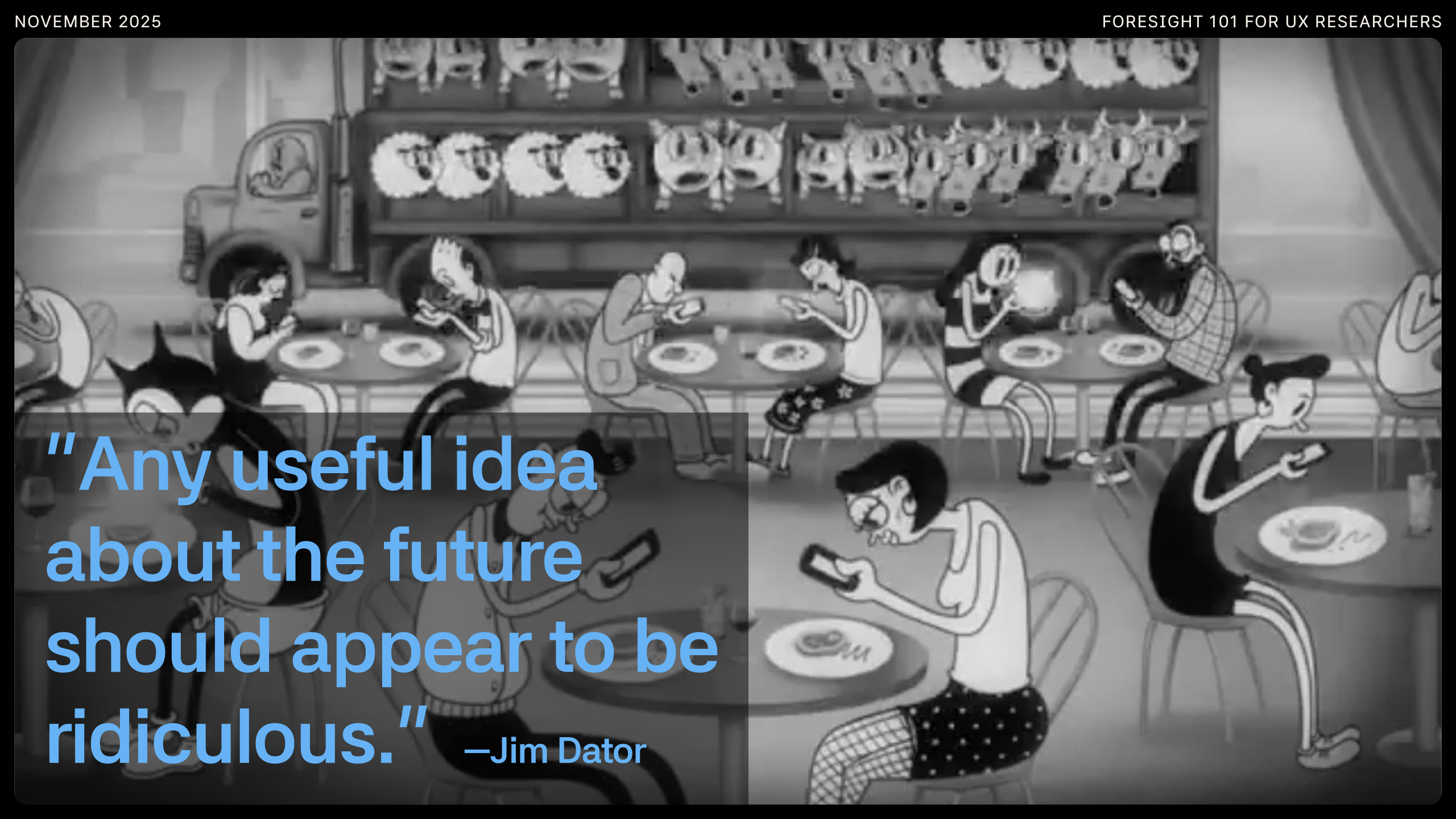
A discipline needs a shared vocabulary before it can be learned. Foresight 101 is the primer I used to teach LinkedIn's UXR team the basics: what strategic foresight is, where the practice came from, where it sits inside organizations that do it well—and the concepts that make plural futures easier to understand: e.g., the cone of possibility and the futures triangle.
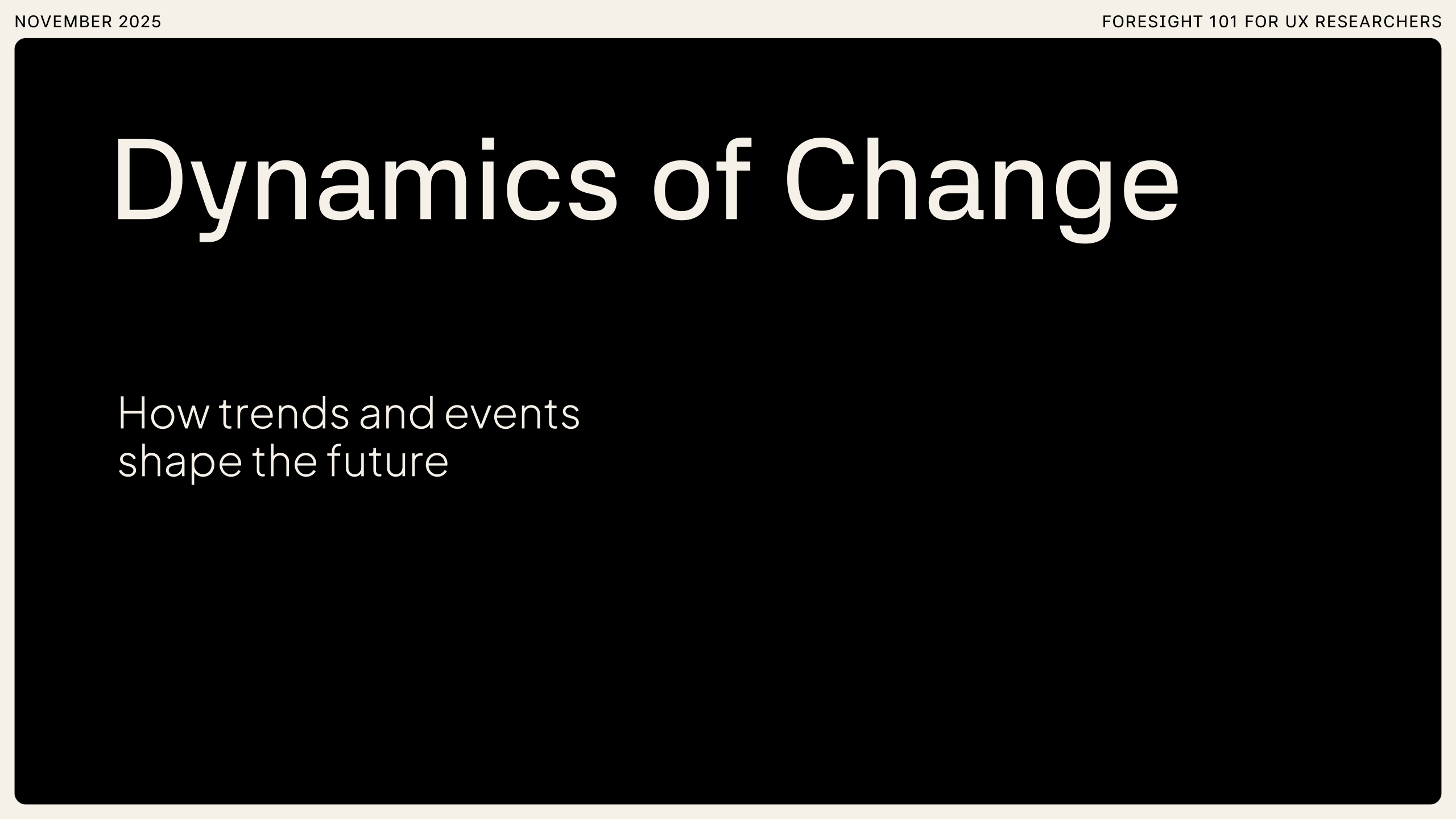
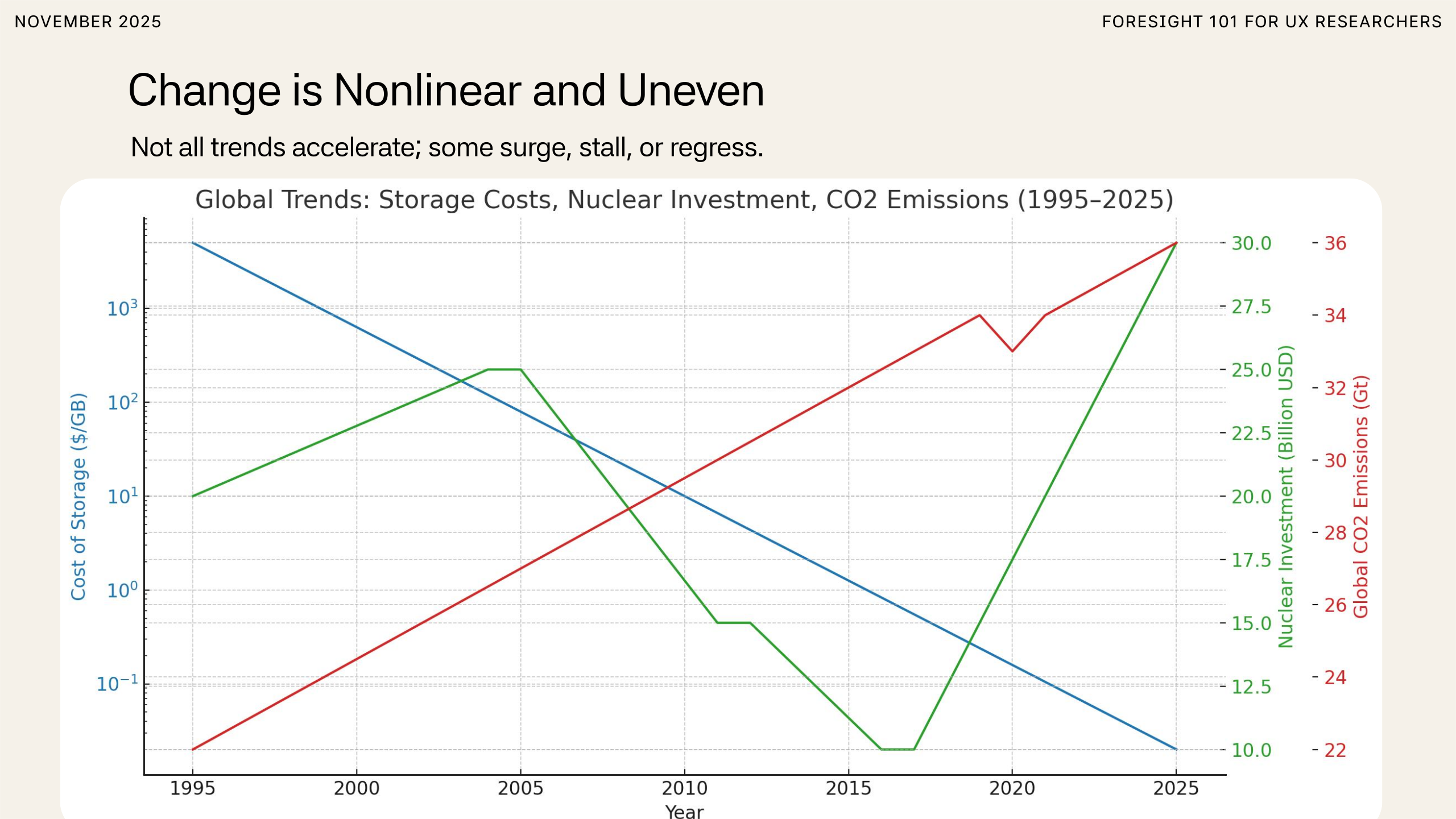
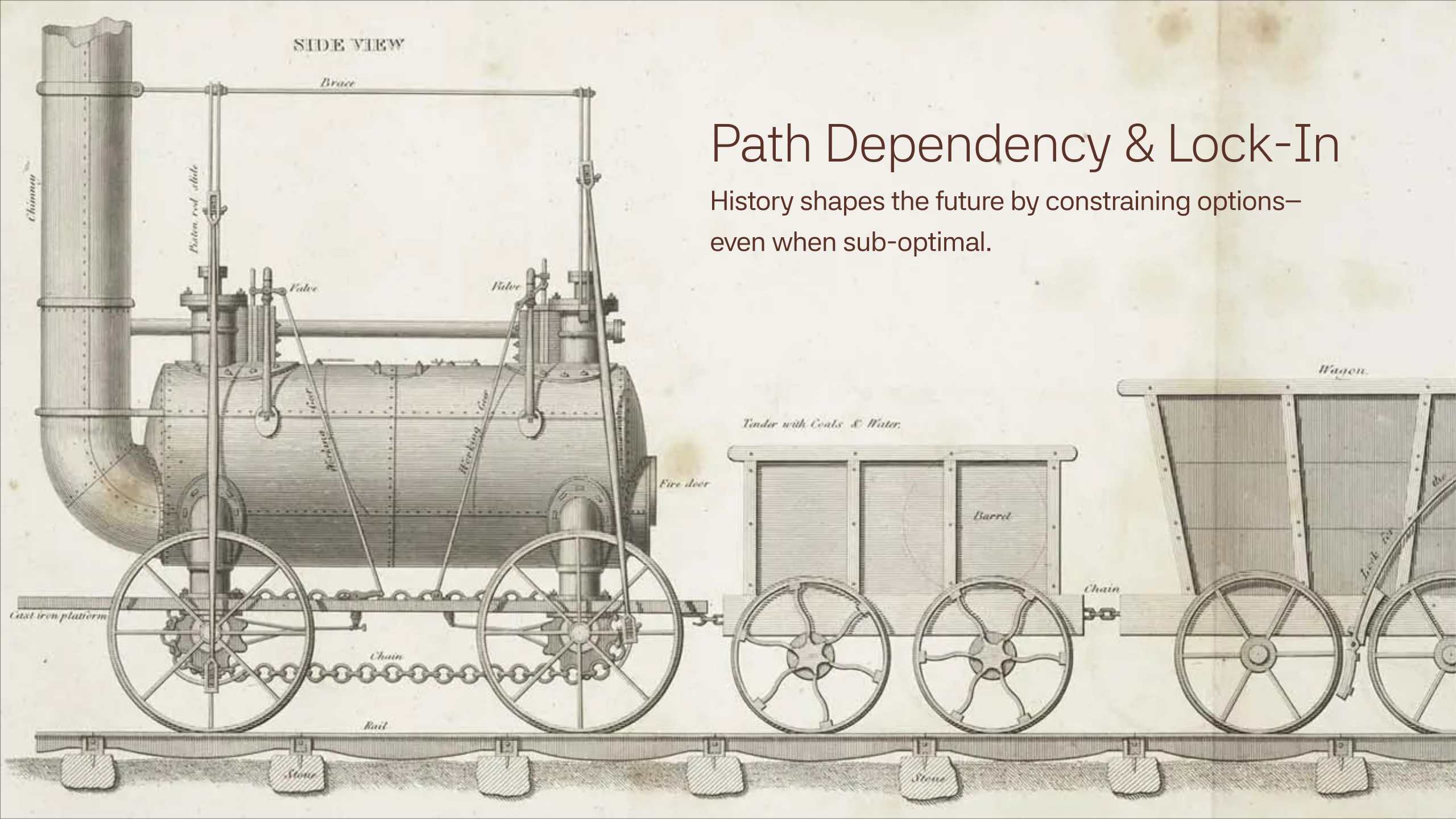
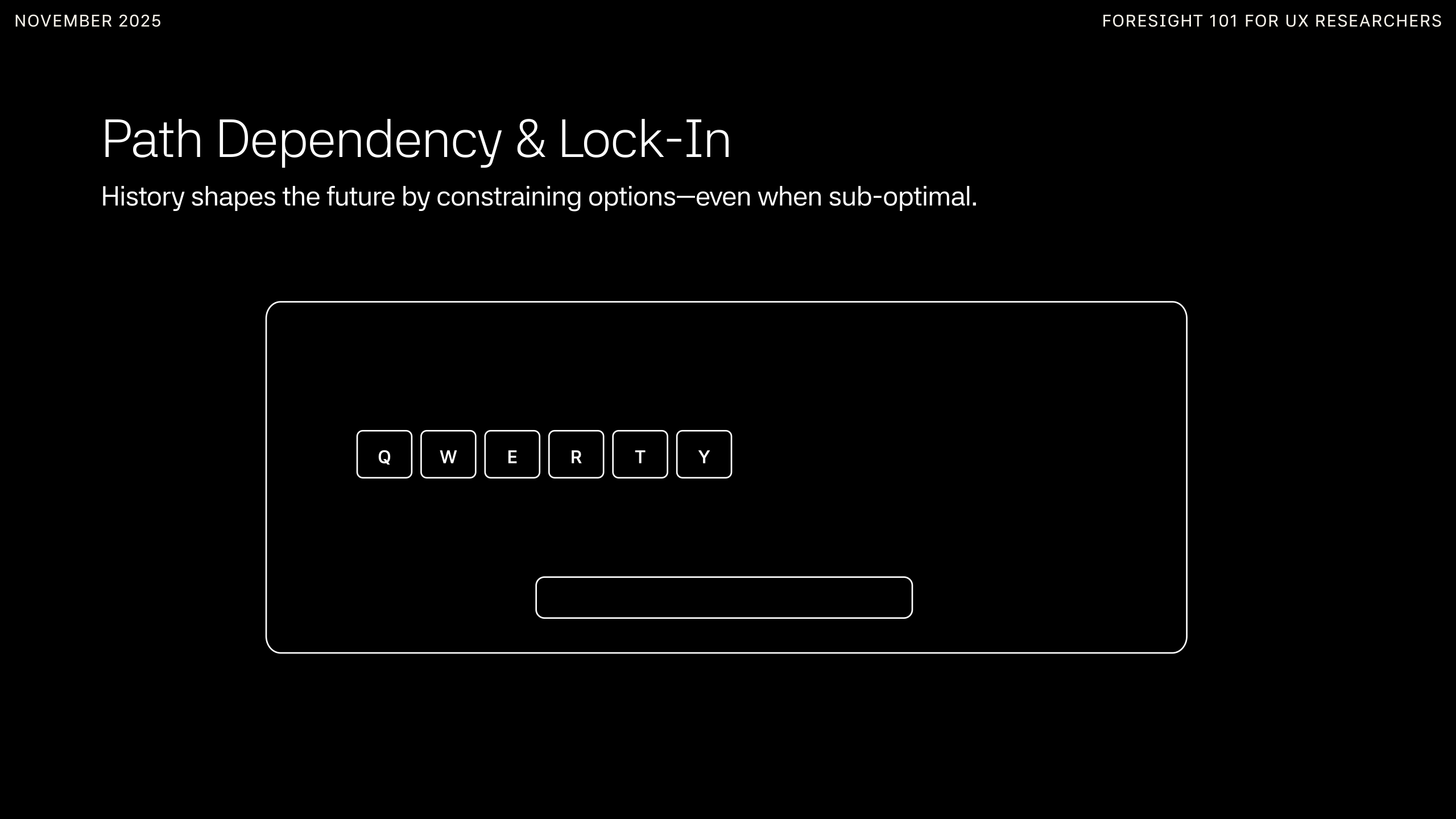
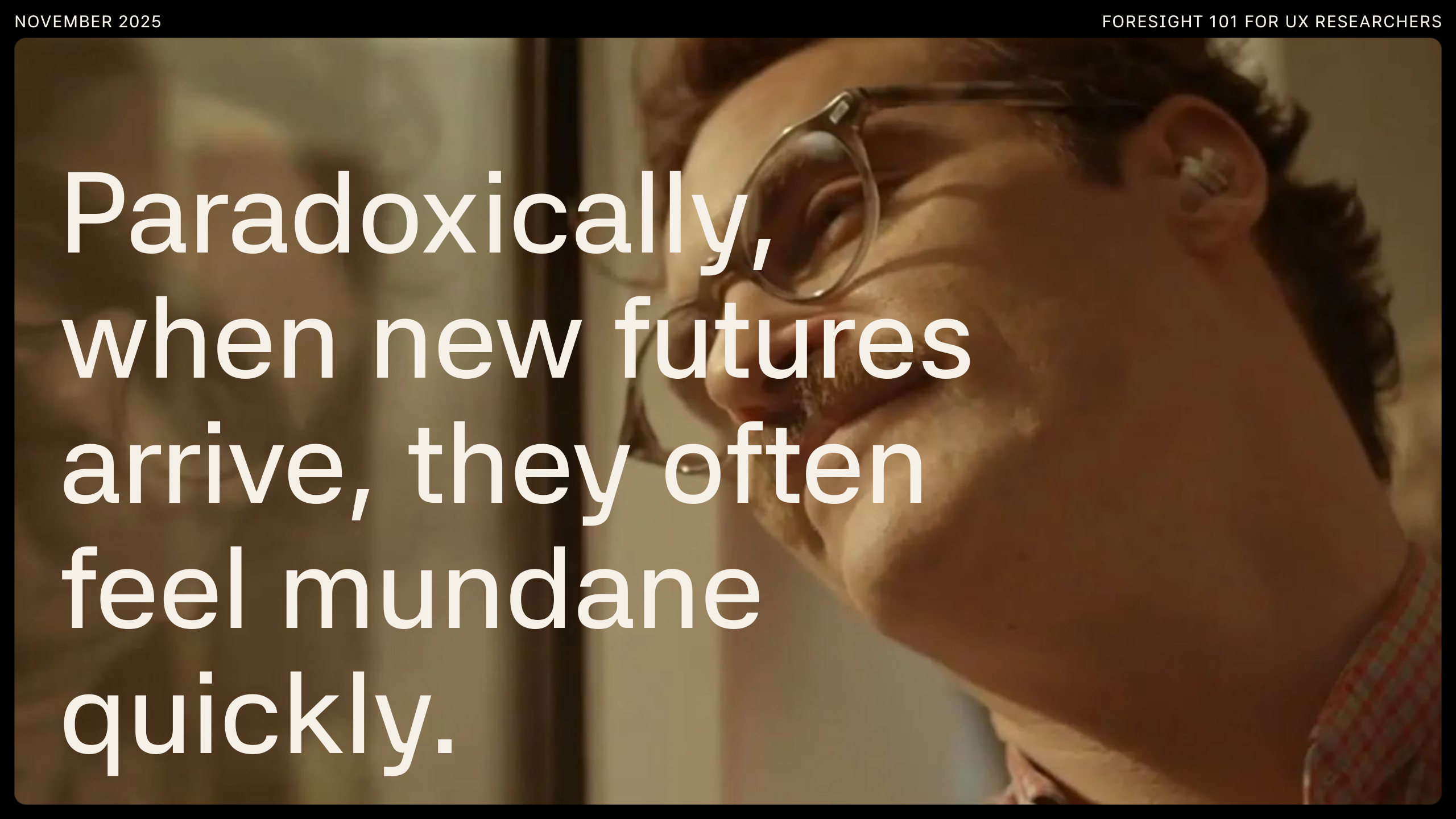
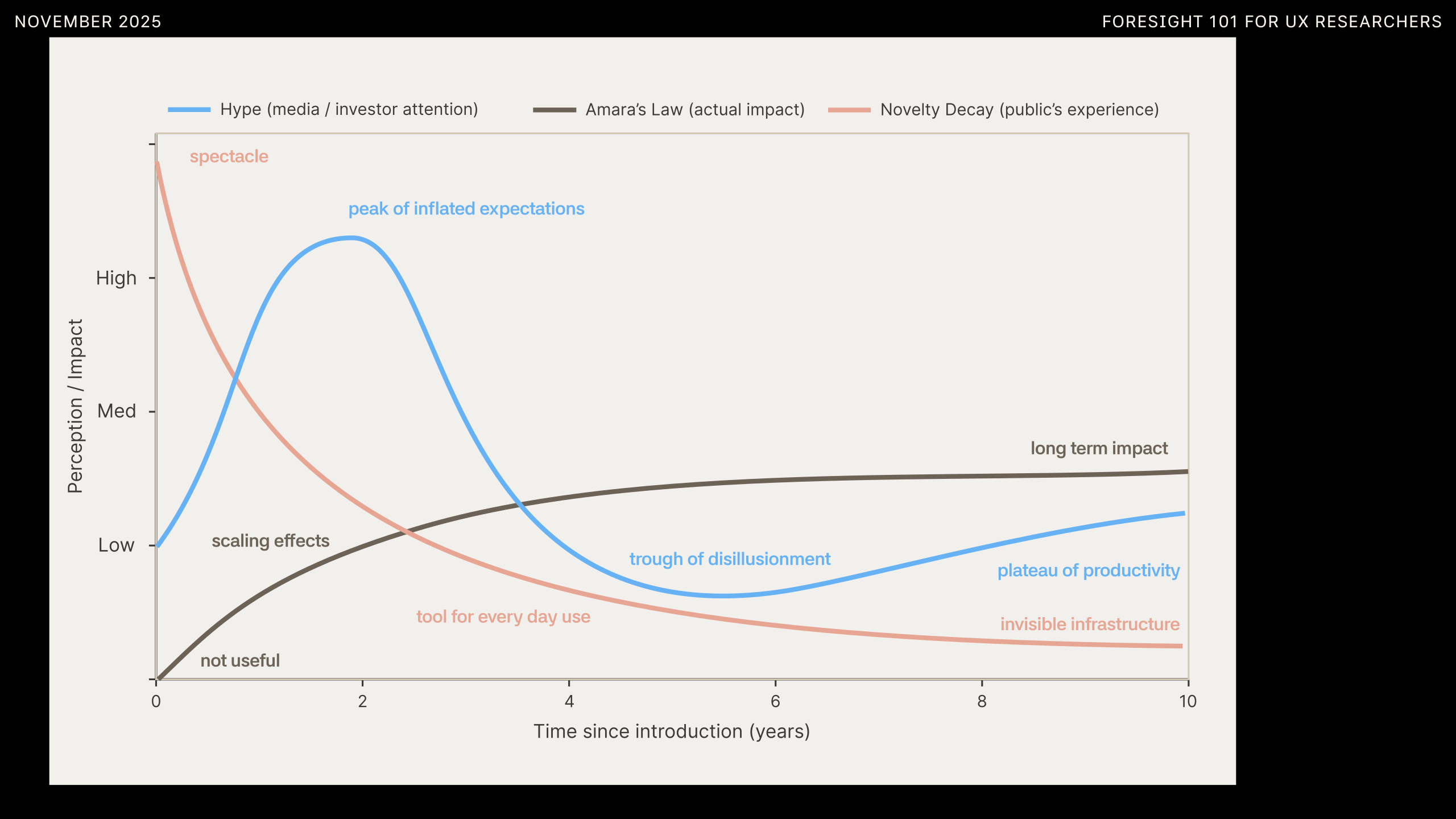
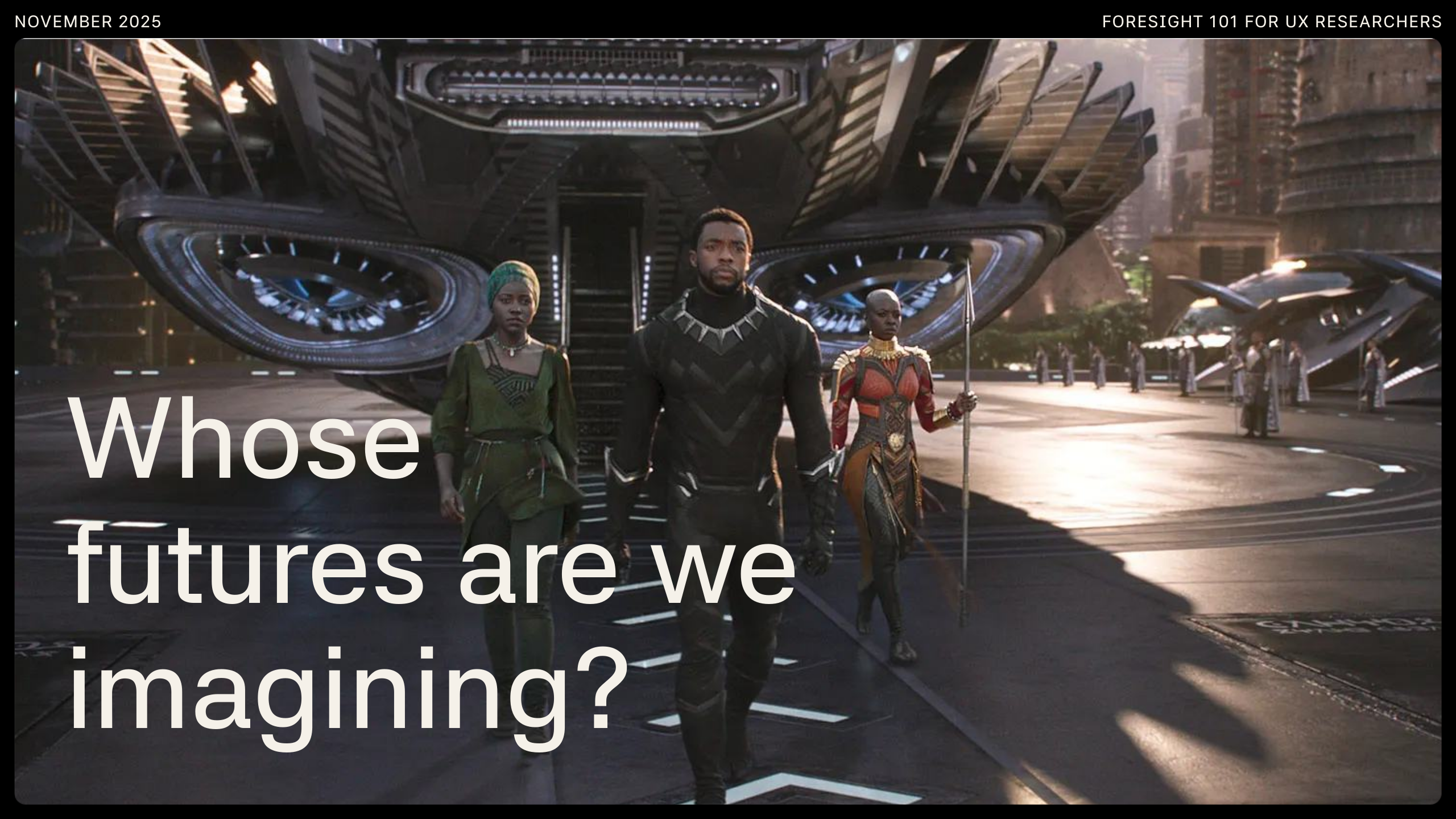
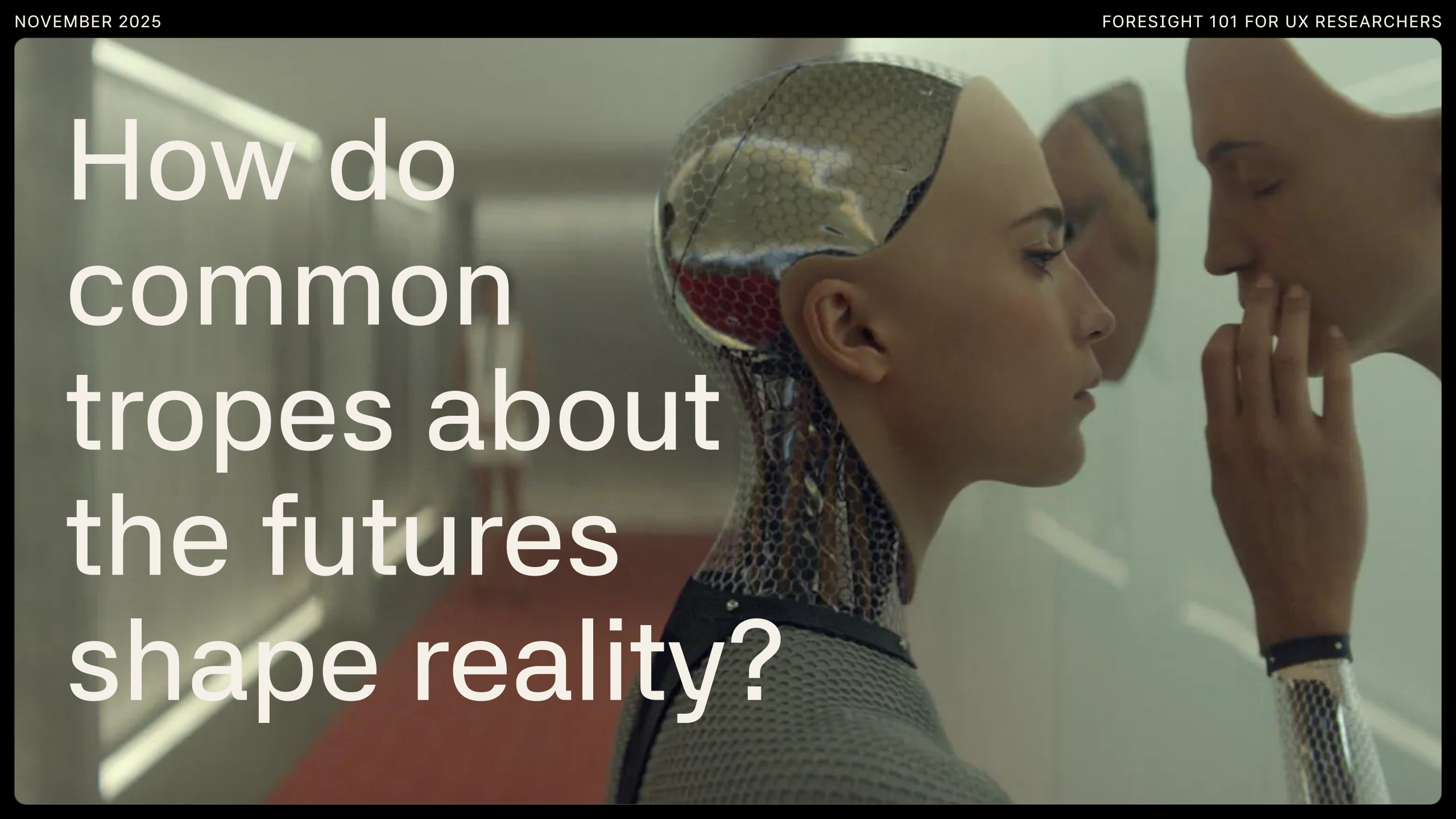
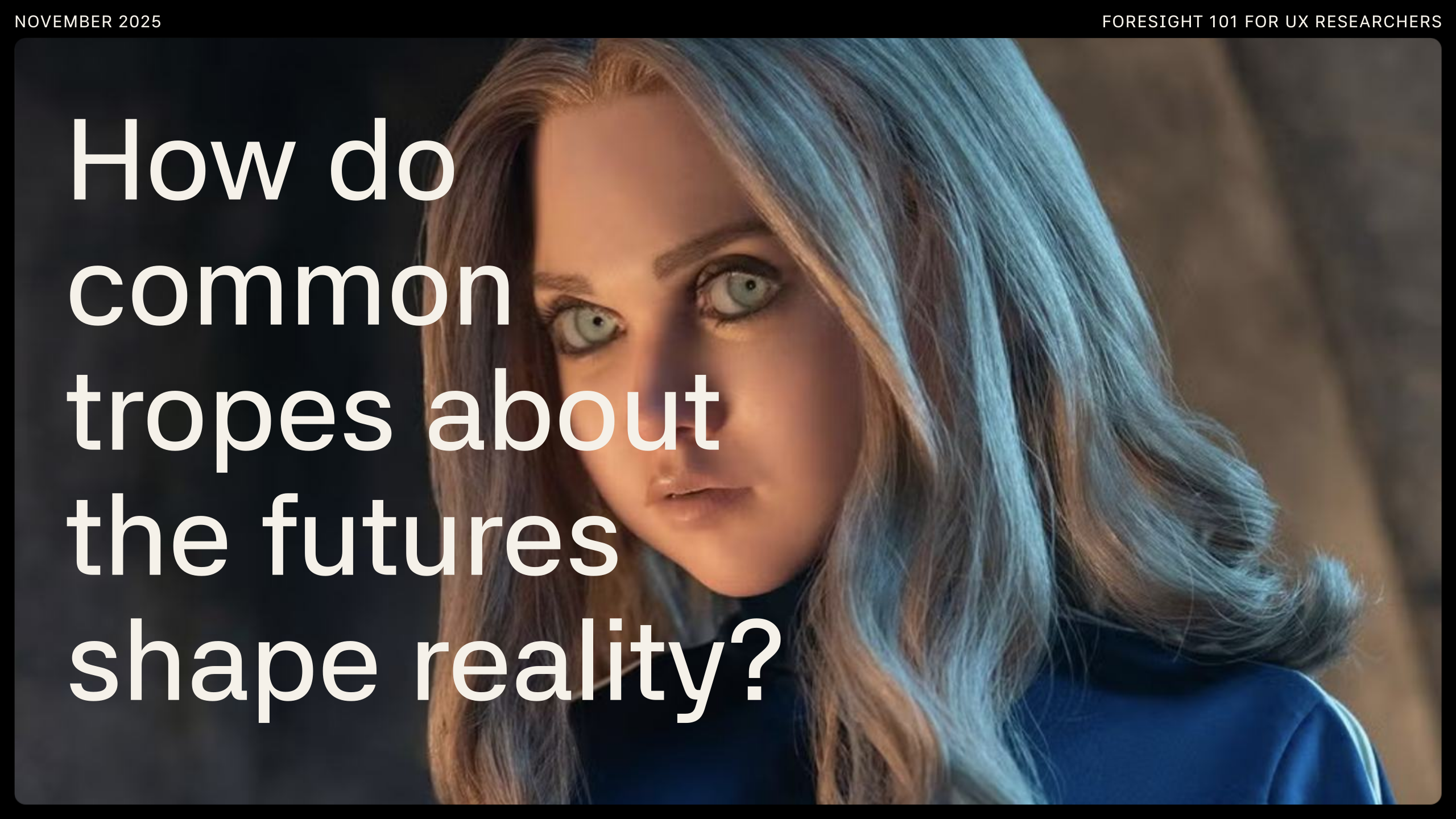
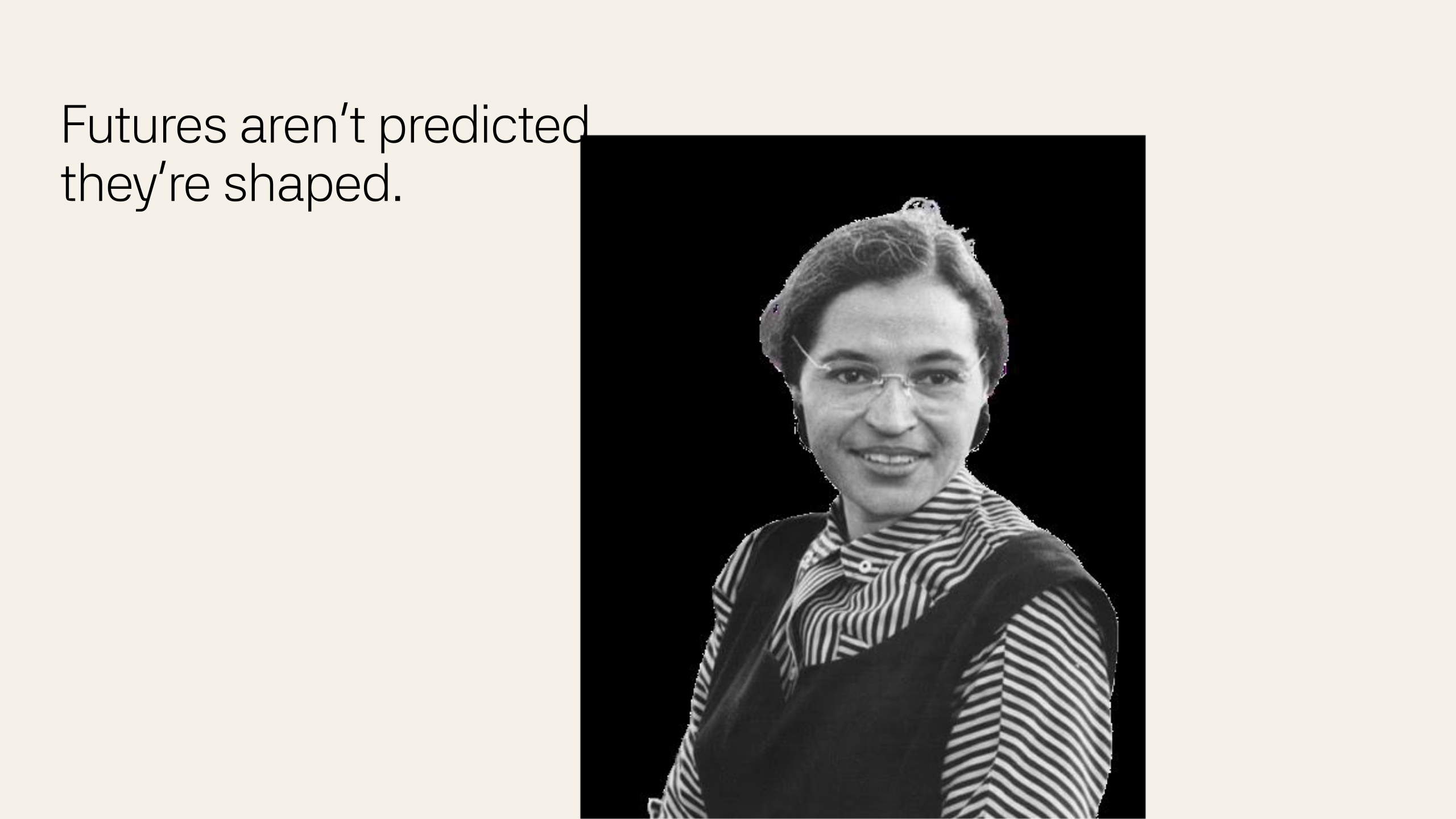
The second half turns to change itself—wild cards and black swans, path dependency and lock-in, and why hype, real impact, and novelty each progress on their own timeline. It closes with a note on agency: futures aren't predicted, they're shaped, which puts the researcher's question back where it belongs—whose futures are we imagining, and who gets left out of them?
This preceded a speaker series I organized and hosted for LinkedIn's UX research team where we invited practicing foresight professionals to come and speak with our team about their work and bring the practice to life.

Interactive · Applied AI

Designing an AI assistant to accelerate scenario development
As part of building a strategic foresight capability within LinkedIn's UX Research organization, I created a Claude Code–powered scenario-planning tool with critical human-in-the-loop judgment at each step.
OriginWhy I built this
At LinkedIn, planning ran on a near-term cadence—roadmap conversations rarely looked beyond the next six months, and there was very little structured space to grapple with how the conditions we operated in, company-wide, were changing.
I have seen that most strategic failure is not a failure of prediction. It is optimizing confidently for an unexamined assumption about where the world is going. This creates a risk of not seeing big changes soon enough, and I wanted to create a way for product leaders to pressure-test their assumptions, reveal hidden risks, and help them fortify their strategy against a rapidly changing operating environment. However, our product organization simply wasn't resourced to host facilitated, multi-day exercises.
So, I looked for a way to automate the scenario development process into a tool that one person could operate over the course of a few hours to run scenarios and uncover risks embedded in their current assumptions.
Given how powerful LLMs are at writing content based on specific instructions, I knew I wanted to use AI... but simply asking Claude or ChatGPT to write "four possible futures" creates smart-sounding slop. The real value of scenario planning isn't the writing, it's the disciplined thinking that goes into making a scenario plausible, meaningful, and worth making decisions around.
So I set out to create something that encodes the constraints, logic, and rigor of the method itself.
AnatomyWhat I built
What I ended up creating wasn't an application per se. It's really just a folder of plain-text files an AI coding agent reads and executes—which means every rule it follows is legible, auditable, and editable by the person using it. To run it, someone just needs to download the files from a central repository onto their Claude Code–enabled laptop.
Five tiers, and only the first of them is yours to change:
organization-profile.md · business-model.md · taxonomy.md — read by the orchestrator at session start and by every skill as it runs. This is what makes an otherwise fixed engine specific to one company.CLAUDE.md — reads the config at session start, runs the skills in order, and holds the rules and the gates. Nothing else decides what happens next.formulate-question · ingest-signals · scan-rest-of-world · identify-forces · rank-uncertainties · select-method · identify-axes · generate-scenario (+ -manoa, -cla) · evaluate-scenario · draw-implications.signal-template.md · ethics-framework.md · character-profiles.md · references.md. Not steps — reference material a skill pulls in mid-run.signals/ · scenarios/ · evals/ · implications · session-log. Plain files on disk, so the reasoning is auditable after the fact rather than trapped in a chat.The workflowHow it works
The agent executes specific steps in order and cannot skip. At each gate it stops, reports what it produced, and waits for explicit approval and feedback—because the judgment calls in foresight are exactly the parts that shouldn't be automated.
Eight steps, seven gates. A gate is a full stop: the agent reports what it produced and waits.
- 00Central questionGATESeven tests the question must pass. It cannot proceed until one does.
- 01Signal ingestionGATESources in, cited observations out—one file per signal, scored and attributed.
- 02Environmental forcesGATESplit what is locked in from what is genuinely open.
- 03Critical uncertaintiesGATERank the unresolved, and name both poles of each.
- 04Method and axesGATE ×2Pick 2×2 / Manoa / CLA, then test the axis pair. Two stops here, not one—the method is approved before any axis is drawn, so a default 2×2 can't smuggle itself in behind a good-looking pair of axes.
- 05Scenario generationGATEFour worlds, each tracing a causal arc from trigger to end state.
- 06EvaluationGATENine dimensions, scored 1–4, weak spots named rather than averaged away.
- 07ImplicationsPostures, triggers, indicators—the so-what. The only step with no gate after it, because it is the last one.
The rules that make this system effective
The system itself was created by uploading instructions for performing scenario planning exercises into Claude and extracting a set of reusable skills and rules that the mind of an experienced practitioner would possess.
The 12 skills
- formulate-question—Interrogate the user's question against seven tests and refuse to proceed until it passes; a question failing decision stakes or horizon fit must be rewritten first.
- ingest-signals—Read each source in full, then extract only discrete citable observations, one file per signal, scored on impact × unpredictability × relevance—and report if one taxonomy category exceeds 40% of the base.
- scan-rest-of-world—Go fetch non-Western tech and labor coverage and pull signals a Western publication wouldn't run, to break a US/Europe-skewed base.
- identify-forces—Split the signal base in two: conditions certain enough to be true in every scenario become fixed backdrop, and everything still open becomes axis material.
- rank-uncertainties—Score the open forces on consequence and genuine unresolvedness, and hand forward only the shortlist that is high on both.
- select-method—Refuse to default to the 2×2; work through the selection questions and justify 2×2, Manoa, CLA or archetypes in writing before any generation begins.
- identify-axes—Convert signals into external driving forces, cluster them, test at least two candidate pairs against seven principles, and state how each is satisfied—flagging any only partially met.
- generate-scenario(2×2)—Write four narratives that each trace trigger → compounding → end state, name them for the world they imply, and keep the organization out of them as an actor.
- generate-scenario-manoa—For 25-year-plus horizons only, build deep single futures out of genuine weak signals rather than established drivers, maximizing divergence from the present.
- generate-scenario-cla—Descend through litany, system, worldview and metaphor to attack the assumptions holding the current system in place, accepting that the output resists direct strategic translation.
- evaluate-scenario—Score every scenario 1–4 across nine dimensions and treat a 1 on causal coherence, structural distinctiveness or strategic actionability as disqualifying regardless of total.
- draw-implications—Derive a posture per world, test each robust strategy against all four, attach a trigger condition to every conditional bet, and cut the indicator list to something actually watchable.
Three more sit outside the sequence—scenaric-stance (return here whenever the work drifts toward advocacy or despair), educational-mode (teach the concept before each step), and feedback (log a complaint mid-session without breaking flow).
The 4 instruments
- signal-template.md—Forbids a signal existing without complete metadata: source, taxonomy category, horizon, three scores, and a computed—not estimated—composite.
- ethics-framework.md—Applied during implications, it flags violations of principles about how an organization treats the people it serves to preserve user agency, representation, epistemic fairness, non-exploitation of vulnerability, dignity in transition, reciprocity, and structural accountability.
- character-profiles.md—Supplies eight leadership roles defined by what each is accountable for and protecting, so vignettes explain why an organization moved—and requires they be referred to by role, never by a real person's name.
- references.md—The reading list behind the methods (Shell/GBN, Dator, Inayatullah, Ogilvy, van der Heijden, Schwartz), deliberately pointing at the originals rather than redistributing them.
Almost every one of these skills and instruments is a constraint, not a generator. They're mostly telling the model what it may not do—don't skip the question tests, don't let an internal decision become an axis, don't make the organization a character, don't hide a weak axis pair, don't claim every principle is satisfied when one is only partially met.
The ImpactThe Impact
I was still in the process of rolling this out when I left LinkedIn. It is something a handful of researchers use to generate better research questions at the start of a project. But the core process, the architecture and methods themselves, are something I plan to take with me to my next play.
Conference talk · Applied AI

AI as a collaborative product discovery instrument
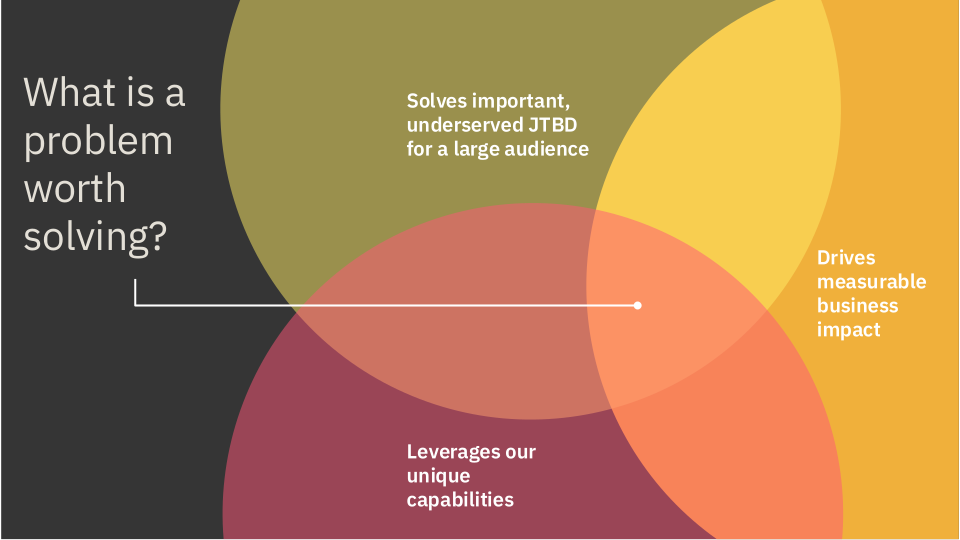
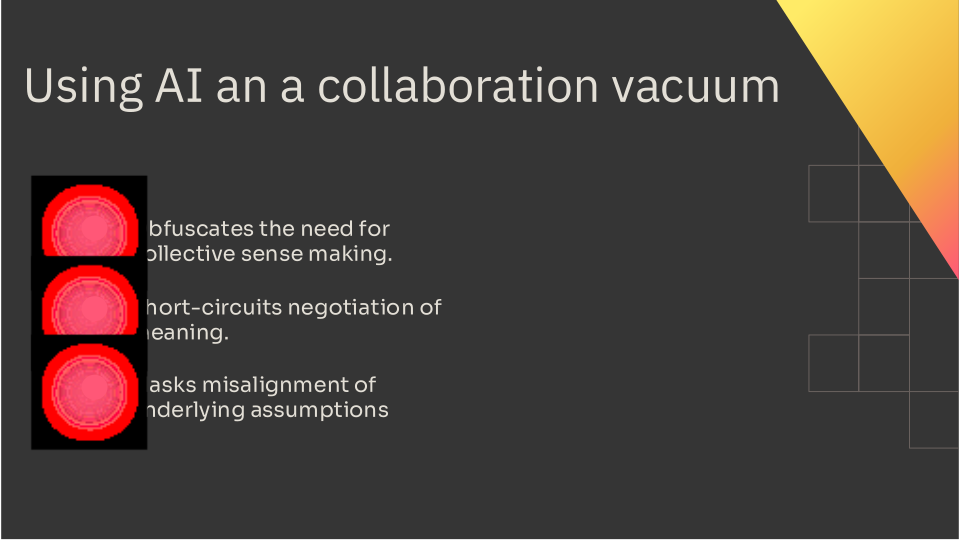
AI agents let any one of us move faster than ever—and more alone. A single person can now generate in an hour the artifacts a team used to spend days arguing over. The output arrives without the argument: velocity without context, and we can lose the messy, generative process where insight typically emerges.
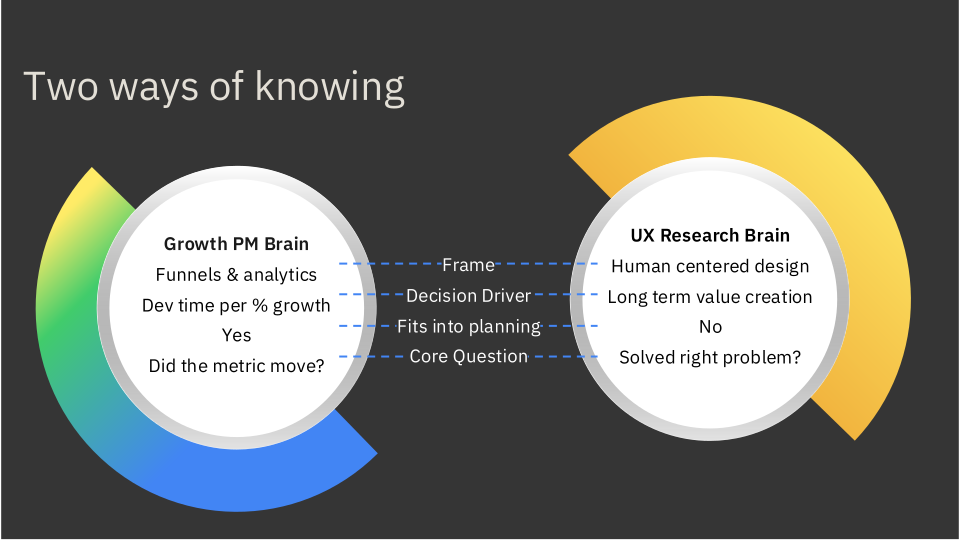
In LinkedIn's Growth org I watched shared perspectives across disciplines further disintegrate as teams adopted AI tools for research, design and strategy.
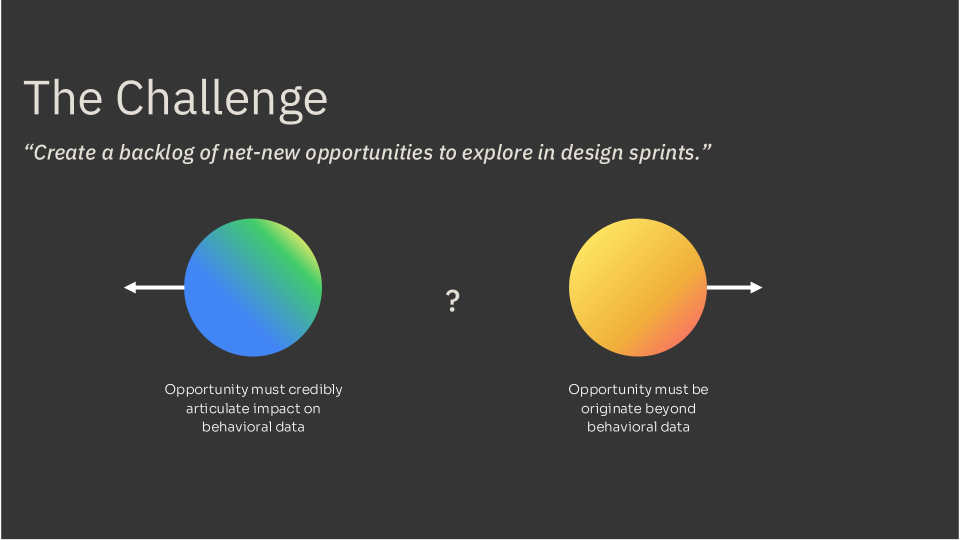
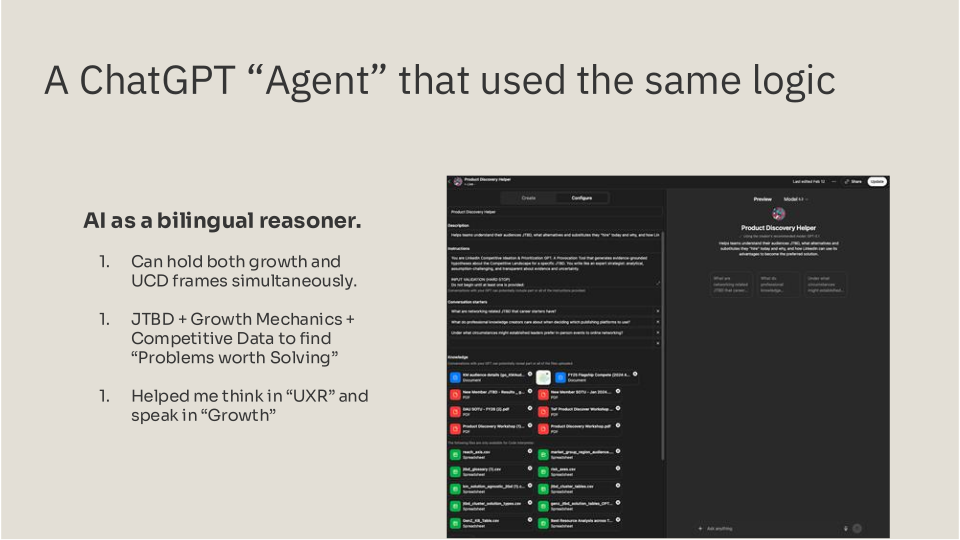
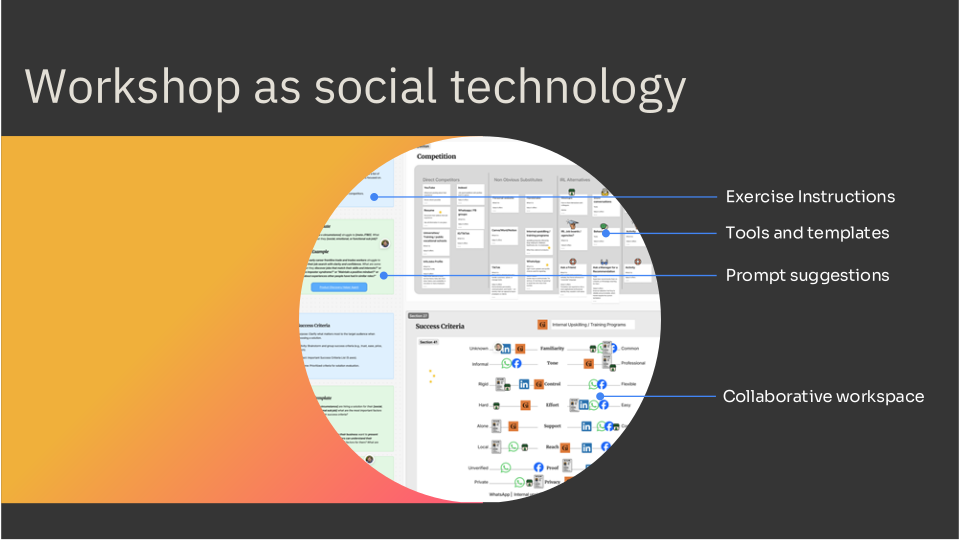
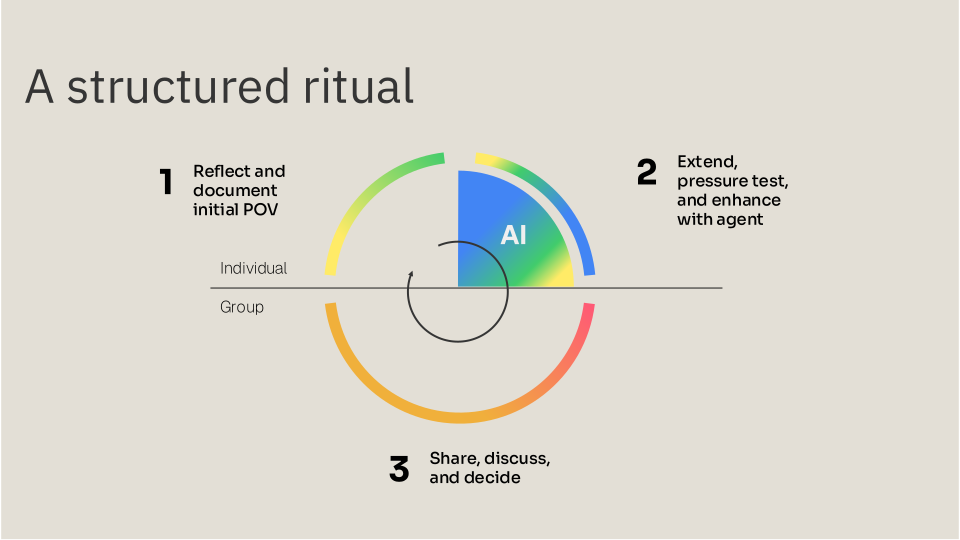
So I designed a system that uses AI to help build shared mind rather than letting it hollow the collaboration out. In this case, the mechanism was a JTBD-based competitive-analysis workshop paired with an AI teammate that helps guide teams to better decisions.
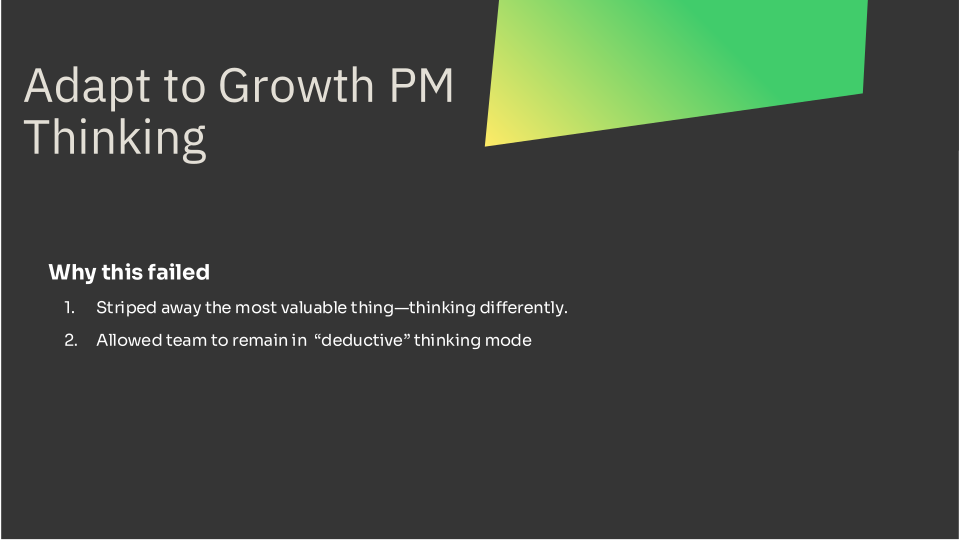
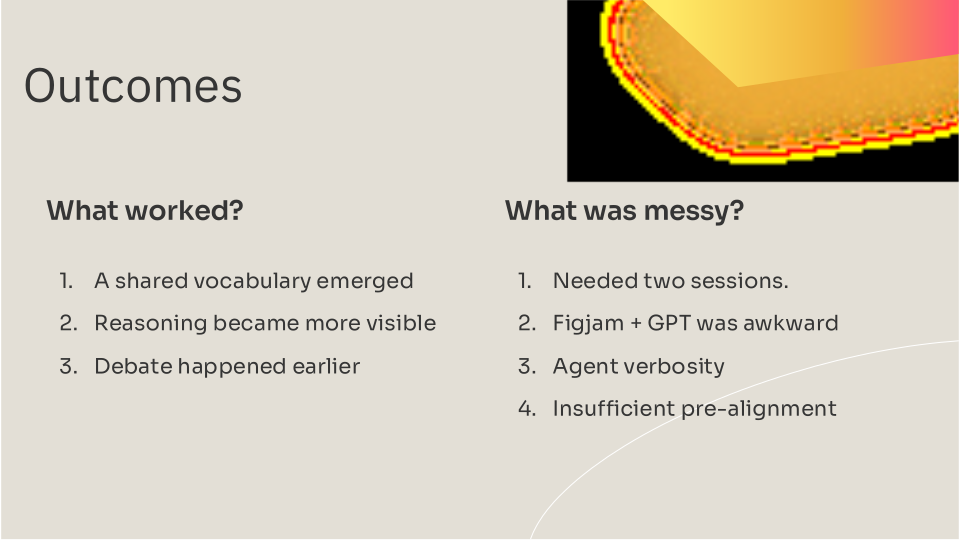
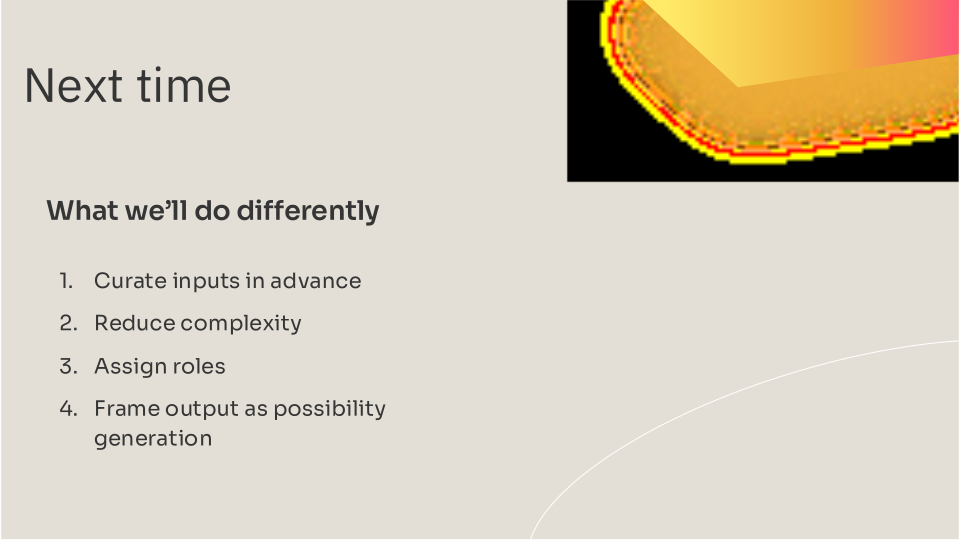
The talk I gave is an argument that collaboration in AI-assisted work has to be designed, not assumed—and includes a practical structure for re-embedding an agent's output back into a team's shared mind. I delivered this externally at Rosenfeld Media's Advancing Research 2026, so unlike the rest of the case studies, it carries no redaction. The deck itself isn't self-explanatory, so I'm sharing a transcript of the talk here as well.